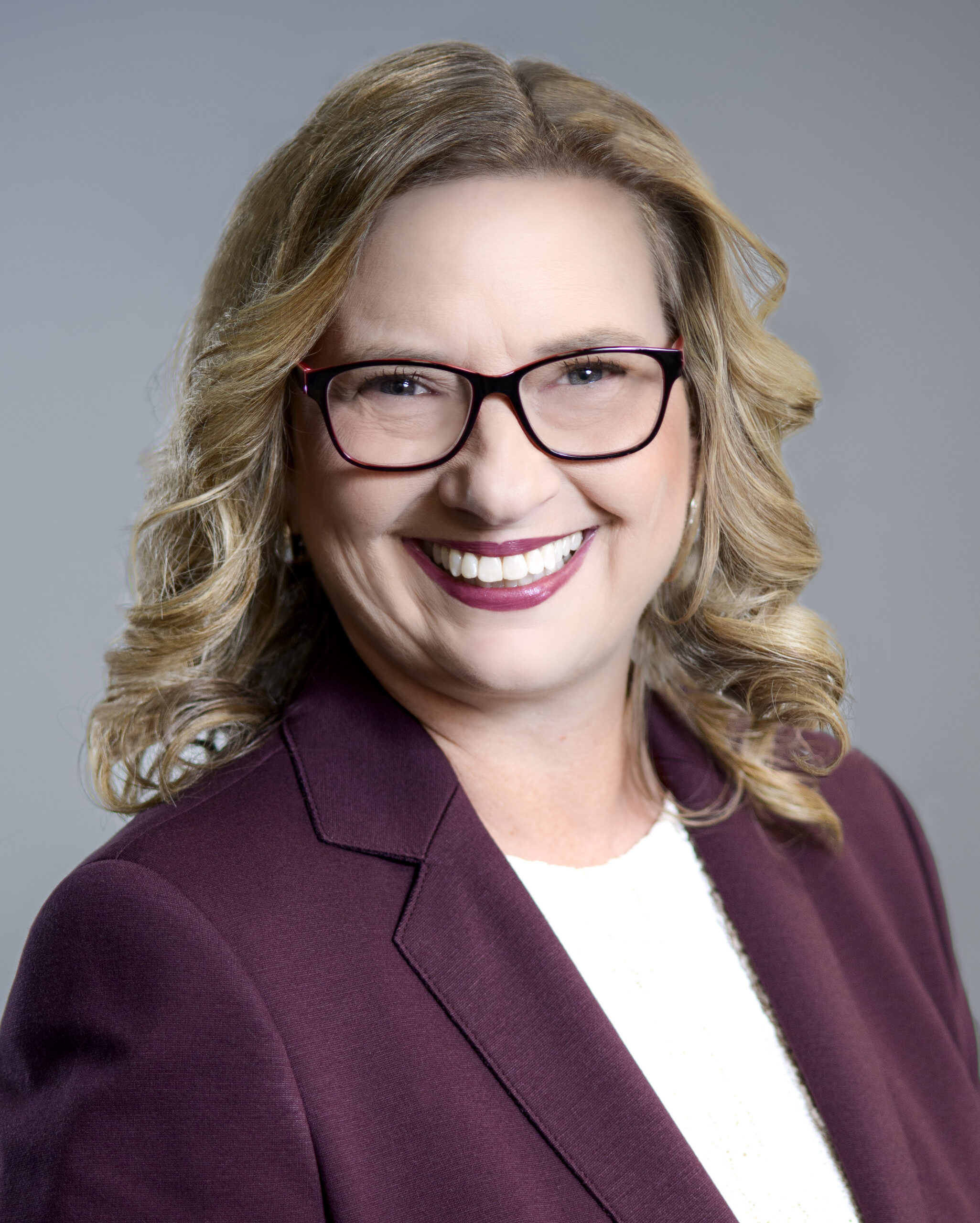
There’s a stack of papers somewhere in your house right now that you’ve been meaning to deal with. Maybe it’s in a drawer. Maybe it’s in a basket by the door you keep walking past. For Lisa Woodruff, that stack — and the chaos behind it — became the thing that changed the entire direction of her life.
In this episode of Her Story Unscripted, Lisa Woodruff shares the honest, unscripted story of how a recession, her parents’ divorce, and her father’s death collided all at once during the decade she spent as a stay-at-home mom — and how organizing her home became the way she found her footing again. What started as helping a few women clean out a closet turned into Organize 365, a company built on the belief that a household is its own kind of business, and the woman running it deserves to be treated like a CEO.
If you’ve ever felt like you’re drowning in the invisible work of running a home — the mental load nobody sees, the papers nobody wants to deal with, the sense that you’re supposed to have this figured out by now — this conversation is for you. And if you’ve ever felt guilty for taking time for yourself, Lisa’s reminder that self-care isn’t selfish might be the thing you needed to hear today.
What We Talked About:
In this episode, Lisa and I talk about:
- The recession, her parents’ divorce, and her father’s passing that hit all at once while she was raising two kids
- Why she quit teaching and started organizing homes — and what happened when her clients stopped needing her
- The five levels of work happening in every home, and why most women are stuck doing the wrong one first
- Why paper feels so overwhelming, and what actually needs to be kept versus let go
- The Sunday Basket — and the honest confession about why Heather isn’t using one yet
Episode Highlights:
00:00 — Introduction — Heather welcomes Lisa Woodruff.
02:17 — Lisa’s path from stay-at-home mom to founding Organize 365.
08:42 — The recession, her parents’ divorce, and losing her dad — all at once.
15:32 — The five levels of work happening in every home.
24:11 — Why paper is the hardest thing to organize, and what to actually keep.
31:46 — What the Sunday Basket is and how it changes your week.
44:18 — Where to connect with Lisa Woodruff.
Meet Lisa:
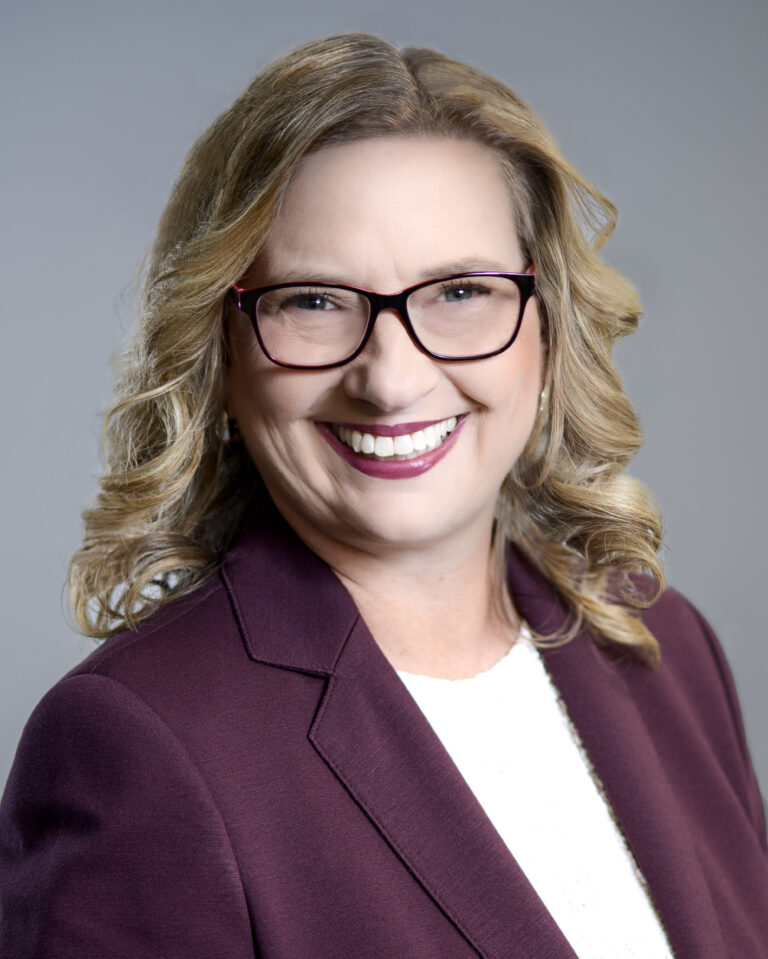
Lisa Woodruff is a productivity specialist, home organization expert, and founder and CEO of Organize 365®. After spending a decade as a stay-at-home mom, she built a company that helps women organize their homes and their paper with functional systems that actually work — including her bestselling Sunday Basket® system. Her top-rated Organize 365® Podcast has surpassed 25 million downloads, and she’s the author of several Amazon bestselling books, including The Paper Solution. Lisa is in the final stages of a PhD in Psychology, where her research focuses on operationalizing the definition of housework and testing real interventions for homeowners. Her mission is to free every woman to pursue her unique passion and gift with the world.
Full Transcript:
Lisa Woodruff: Especially if you have kids, how many times do we organize their rooms constantly? How long does it stay organized? Sometimes, not even before we can get through the threshold and back into the hallway, and they’re already throwing down like, oh, my gosh, what am I doing? But if you will give yourself the gift of the next couple of weeks, whenever you find a spare 5, 10, 15 minutes Thursday night where you want to just turn on some music and go and clean out under your bathroom sink, and clean out your nightstand, you will feel so much better. And when you get those three spaces organized, it will minister to you, and you will go to bed, and you will wake up and organize spaces.
Heather Nelson: Welcome to Her Story Unscripted. I’m your host, Heather Nelson, a connector, business strategist, and someone who truly believes that the most powerful conversations happen when we stop performing and start being real. This podcast is a space for women to share honest, unscripted conversations about life, growth, and the experiences that have shaped who we are. No perfectly polished narratives, no pressure to have it all figured out, just real, authentic stories told exactly as they are.
Hello, everyone. Welcome to today’s Her Story Unscripted. I am so excited to have Lisa on today. We just virtually met, but I already know this conversation to be so juicy. Because so many of us are sitting in this crazy time of life, and you’re going to help us get out of it, so welcome to the podcast.
Lisa Woodruff: Thank you so much for having me on.
Heather Nelson: I’m super excited to have this conversation. So you own a business called Organize 365, and we’re going to talk about how you got there and the things that you’re teaching women today. But I would love to hear a little bit more about who you are. You have children, and there’s a reason why you’re sitting where you are today. So tell us a little bit about your journey.
Lisa Woodruff: My life story in a nutshell is, I was born and raised in Ohio. I’ve always lived in Ohio. And when I was a kid, all I wanted to do was babysit, and someday, be a wife and mother. Stay at home mom was my ultimate goal. I went to college and got a teaching degree, but I literally was shopping for a husband. So back in the day, they would call that getting your MRS, like your missus degree, and I did, baby. I snagged a college boy. We got married. We weren’t able to get pregnant. But about five years later, we adopted our two kiddos, and I did spend a decade as a stay-at-home mom, which I loved. It wasn’t all roses. Raising kids is hard, and the kids had challenges and everything. But it was what I was uniquely gifted and created to do was to be a stay-at-home mom. I loved every minute of it. However, during those 30s while I was raising those kids and they had challenges, we went through a worldwide recession. Ran out of money. My parents got divorced. My dad got sick, and he ended up passing away. My sister and I had to settle the estate. Not fun things happen. I just kept feeling like I was in this pressure cooker, and it was just getting more, and more, and more pressure, and there was no release valve.
And as I was turning 40, I was like, okay, my kids are in middle school now. We definitely need me to earn more income than I can earn. Just on a little side hustle, my dad’s gone. My parents are divorced. The holidays are all different. Hashtag adulting is a little bit less fun than I thought it would be. I still held on to that MRS degree. I still have it. 30 years and running, but I didn’t know what was next. I didn’t know what was next for me. I didn’t know what was next for the economy. I was just really in a dark place, and that’s when I started Organized 365. I had gone back to teaching. I quit my teaching job because even though my kids weren’t home, they were at school. They needed a stay at home mom’s hours and flexibility for all their medical conditions and things like that. And running a household takes a lot of time, so I needed a lot of time to run that household. I started Organized 365 because I love organizing. I’d either been hired or been successful wherever I was hired because I was organized, or I could help organize other people so I thought I’d just help organizing people. So for a couple of years, I did in-home organizing, and then I realized the people I was organizing were learning how to organize themselves. They canceled my services because they were able to get themselves organized. Well, I’m a teacher. I was like, okay, well, if this is learnable, which I didn’t know it was. But now, I saw it was.
How do you teach organizing online? Because I always wanted an online business. This is like 2015 now. How do you teach it online? How do I know what piece of paper you’re holding up? How do I know what bedroom you’re in? How do I know what you’re looking at that you want to organize? And so that’s why I started my podcast 12 years ago. I’ve been teaching online organizing. It’s been a long time. Then I realized that we didn’t have some supplies. You have school supplies, you have work supplies, but we have nothing to rent in our home. So I created the supplies that we need to do our weekly planning and have a better system than a file cabinet. Really create a curriculum for organizing your entire house. And then when I was turning 50, I was like, okay, this is all well and good. I’m helping a lot of people get organized, become students and learn how to be organized. However, if I don’t get a PhD and start doing academic level research, this learning, understanding and the growth of Organized 365 will end with me. My kids won’t inherit my company. Maybe it’ll get it sold. Who knows? But it won’t live on beyond my lifetime and my generation. So if I go into academia and start doing academic research, studies and things like that, then I can move this into science. So that’s what I’m doing now.
Heather Nelson: And that’s what you’re doing now. I just love that everyone finds their career niche or their passion through something hard, crazy and chaotic. It’s so funny because this is like the ongoing conversation that we all are finding in our 50s or our 40s, like so much later in life. What I think is so cool and one of the things that you said to me that was, I always just assumed everyone was organized. I’m a Virgo. I’m super uber uber organized. And before we hit record, everyone asked me, you run two businesses, you have a podcast, you have kids, you have all of these things. How do you manage it? And I always tell them, it’s the systems I have in place. It’s being organized, because then all of that doesn’t feel so chaotic to me as just spending the time doing the things that you love once everything’s in place. So to that point, let me ask you a question, and we maybe volley back and forth on this.
Lisa Woodruff: I have always been organized too. And what I have observed is in households, we all either organically create our own organizational systems, or we copy a parent’s or a friend’s system. There is no universal system. But as I grew in business, and you said you’re running two businesses. As I started to systematize, hire team members and grow in profitability in my business, I was like, huh, I should do that at home. And so I started reverse. A lot of Organized 365 is me going, oh, I was never a business owner. I was a school teacher. And school teachers just work from sun up until sundown for 10 months straight, and then they take two months off, and then they do it all over again. So there is no delegating. There is no operationalizing in schools, and school teachers don’t get supplies. We buy our own supplies, so we’re used to buying our own supplies. But once I started being an entrepreneur, growing a business, hiring business coaches, putting business systems in place, getting a bookkeeper and getting executive assistant, I was like, oh, my gosh! There’s repetitive things that you do in business that you operationalize, or just delete entirely because they aren’t profitable. But yet at home, we’ll just optimize them and do them faster. So we get through the things that aren’t really very important, so we can get to the important things. I’m like, oh, what if we just stop doing it? What if we just apply these basic entrepreneurial principles to the house? That is where all of this came from.
Heather Nelson: So interesting. I feel like I am pretty organized. But one of the things that I picked up on, especially if anyone’s watching on YouTube, you have this cute little basket of a file thing, and I think that is one part of my life that feels very chaotic is the papers, the endless amounts of papers. My husband’s going through a workers’ comp thing right now, and so I literally have a bucket of papers that I just throw everything into. And I feel papers, and you probably can speak to this, is the most overwhelming part. I just throw it in a drawer, literally next to me is my two file drawer, which I will probably never ever file. But I think I’m going to after talking to you today.
Lisa Woodruff: Okay, can I ask you questions on your podcast?
Heather Nelson: Yes. Oh yeah, sure can.
Lisa Woodruff: Because I can tell you, here’s what I found is the answer. But why is the paper stressful? Why don’t you just get rid of it?
Heather Nelson: I know because I feel like we have to keep everything, and you were alerted to it earlier. I think it’s how we were grown up. I still look at my grandma, and when I go to her house, all her bills, she has so much paper. And it was one of those things growing up, like you had to keep it. But now, everything’s so digitalized that I’m like, why do I need to keep it?
Lisa Woodruff: No, you do actually need to keep it. Because, okay, there is analog paper, like physical paper that piles up on your counters, and then there is digital paper, which is like all information, really, whether it’s paper or digital information. The purpose of information is that you can get the information you need when you need, so that you can make a decision and act on it. And so once you realize that is this paper or information that I need you already mentioned there’s a workers’ comp case. Okay, this is a classic example. Fill in IEP, estate, medical condition, school project, whatever. Fill in whatever you are working on for. We are now talking about this workers’ comp claim. If you have a workers’ comp claim, okay, now you have to figure out, when did it start? What services did you have? How much did you spend for those? Any ancillary costs. When did you talk to this person about it? Did they follow up here? And then there’s a clock ticking as to when that’s going to get filed or not. And then you have to have correspondence that goes back by email. Okay, I’m right, aren’t I?
Heather Nelson: Now we’re all overwhelmed. Yes.
Lisa Woodruff: Okay, but this is modern life, and I could do the same exact scenario. I’ve never done a workers’ comp claim and see how accurate I am. Any project that we’re doing, fun or not fun, has information related to it. And that information is found in many different places. There’s you talking to the lawyer. There’s the email communication. There’s the my chart or whatever the medical chart is. There’s the police report. If there’s a police report, the incident report at the office. If there was an incident, so that’s five different digital systems with which this information could be in. They do not connect. You have it digitally, but it’s a pain to get it. When you print it all and have it in front of you, and you go to your lawyer and they say, well, where’s the incident report? And you hand it to them. Where’s the police report? And you hand it to them. Where’s the medical? And you hand it to them. Man, you are really using that $350 an hour well. Because you’re not like, oh, I have it here. I’ll email it to you. Oh, it should be in that file, the email that I sent you last Thursday. Not Friday, last Thursday. You’re wasting so much time just trying to get information.
Also, when you verbally say something like, oh, I’ll send you the information, but this is what it says. Nobody believes you. Even though you’re right, nobody believes you. But if you can hand people a piece of paper, I will be in meeting after meeting, after meeting, be like, here’s the stat. And they’ll be like, no, it’s not. They don’t hand them the paper. They go, oh, it is. I’m like, that’s what I just said. No one believes you, but paper is powerful. Paper is meaningful. It came from Children’s Hospital, or came from wherever, and so there’s letterhead on it. Now it means something even though you had the information. You’re not the authority. The other thing I really like about printing out all of this stuff is number one, digital systems go down, and they lose things. Now, you’ve lost that piece of information or that piece of the puzzle, and now it’s your word versus theirs because you can’t substantiate it.
Number two, if you have all five of those pieces in front of you, and I print out all the email correspondence and all the different medical thing, okay, then I sit there, I’m the lawyer with no computer on. I’m like, okay, well, how did this relate to this? And then I sit there and write like a book report the incident happened on this time, see Exhibit A. Then this happened, see Exhibit B. And I’m like a lawyer, even though I’m not a lawyer. And so when I go to meet with anybody, I’m like, here’s the two pager, and behind here’s all the substantiation. And I have been in a couple of court cases, and so I know how you have to have all these different appendices. Or when I do my scientific work, you always have all these different appendices. So if you have all of your information there and they ask you questions, you can answer the questions and hand them the piece of paper. Now, some people listening may be like, I’m not in a court case, so I don’t need this level.
Heather Nelson: Totally. That’s extreme.
Lisa Woodruff: I don’t need this level of Lisa. Here’s the thing, you never know when you’re going to need this level of information. Couple examples I could think about in my own life. Medical is the top one. None of us have any of our medical records. We just don’t have it. It’s not even in the file cabinet. We just don’t have it. We go the doctor, it’s in my chart somewhere. It’s all digital, right? Legally, you have to keep 7 years of medical records. All medical institutions need to keep 7 years of medical records. My doctor doesn’t. I was like, what do you mean you don’t? They’re like, we just pay the fine. I was like, oh my gosh, you just don’t even do it. They just don’t even do it. Number one. Also, a lot of times when you have something going on, you would like the records from before 7 years ago, especially with your kids. So if you’re dealing with a 9-year-old, but you want something from when they were two, you might not. And then those systems go down.
Heather Nelson: So you’re basically saying we do need to keep our paperwork, but we got to organize it so we can find it easier.
Lisa Woodruff: We need to know why we’re keeping this information and where we should keep it. So the two ways, you keep it. You’re talking about the box, that’s the Sunday Basket. This is the ongoing project. Your spouse’s paperwork is going to be in there because you’re every week moving this project forward. But anything like medical records, we just had a test done with one of our family members. It was an MRI. I always ask for the DVD. You probably don’t know you can get that for free. I always ask for the DVD, and I put it in the medical binder. One, I don’t want to repeat an MRI. This is a sedated two-hour MRI. I don’t want to have to repeat that test. It costs a freaking fortune. Second, if you want a second opinion, they can’t just look at your chart. They’re going to need the DVD anyway. So now, I have the DVD, and turns out this is something we’re going to have to keep doing the MRI for. So now, we could compare year over year. If it’s four years from now, we will go to a different specialist. I have all the DVDs, and I could just hand them to them. I don’t have to do my chart requisition and all of those kinds of things. So yes, you need to keep the information if it is actionable or could be actionable in the future. Bills, no.
Heather Nelson: But that was my question. All our bill statements and utility, like no. Okay.
Lisa Woodruff: If you write them off on your taxes, technically you should have them printed out. But these things that are really hard to replicate that could have a significant impact on your future, like a major medical test, print it out.
Heather Nelson: What are some of the other things that you think paper-wise we should keep? So obviously, medical or anything legal. What other?
Lisa Woodruff: The paper that overwhelms me is insurance paperwork. Holy cow! We have 11 policies for the love. We have four different cars. We have our son’s condo, our house. The older you get, the more insurance policies you get.
Heather Nelson: I was just saying this the other day. I’m like, I have so many insurance. We put so much money in insurance.
Lisa Woodruff: It was like a year ago when I realized that I hadn’t renewed the tags on my car, that I started looking into this because we just moved too fast. I hadn’t renewed the tags on my car or my daughter’s car for multiple years. Also, our daughter who was 22 at the time never added to our insurance. She’d been driving with no insurance because I assumed the guy added her, and I’m paying a lot of money. Yeah, she wasn’t even there. All these things straightened out. So with insurance, I always keep the initial policy, and then the most latest payment with all the 18 million pages they give you. And then when the new 18 million pages comes, I throw the old 18 million pages out. Shred it or whatever. I just have those two things, but the original policy is important. Your original life insurance policy is important. And then I always keep the most recent time I paid for a life insurance policy to show that it is updated. Because if you don’t pay for a life insurance policy, they can cancel it.
Heather Nelson: What about organizing or keeping? What do you do for passwords? Username and password scenario. I have stickies everywhere. Then I went to a class, and they’re like, you can’t have it on a spreadsheet because what if someone gets it?
Lisa Woodruff: I totally have it on a spreadsheet. As a matter of fact, this is how unsecure I am. It’s a Google Doc.
Heather Nelson: Sorry to all the security people out there.
Lisa Woodruff: Multiple people in my company have access to it. There’s no bank passwords on there, but everything else is literally on there, which is great because I’m a business owner. We have a ridiculous amount of logins. But a lot of my personal stuff is there too. Like all my travels, because my executive assistant will support me in that. Really, any program I have on my computer, it all goes there because I just check there. Also, passwords updated on my iPhone. There’s a whole bunch of passwords in there. The other places I keep passwords, I have a little tiny password book at home. That’s where I used to keep them. So the older passwords are in there, and then I have my notes app on the phone. The reminders app, I just have one that says passwords. Just passwords thrown in there. It’s all the random ones. I’m not very good at this. But here’s the one thing I will say about this, and I’m going to be doing something I’ve just learned about this. We really have to know our spouses, our sisters, our parents, anyone you might be the executor of, the passcode to their phone. If you know the passcode to people’s phone, who cares? Just reset it, and it’s going to send you email on their phone if they’re in capacity or whatever, and you’re going to be able to get into any account because you could just reset the password. If you don’t have access to that person’s phone, you’re screwed. Because even if you have the password and it sends an authentication or a code, you still can’t get in. Passwords aren’t good enough anymore. You have to know the password first. But 50% of the time, that’s still not going to get you in.
Heather Nelson: You just need the phone.
Lisa Woodruff: You need the phone in order to get in. And then if you are going to be acting as power of attorney or executor, and you don’t have the phone to get the email password thing, then you have to send your power of attorney or your executor papers to the organization. Wait for them to give them, and then they will give you access to the account. And that is a time suck.
Heather Nelson: We’ve talked a lot about papers, but that’s the one that’s in my life that feels unorganized. Everything else in my life feels pretty organized. But you help someone, I’m assuming specifically women, organize their whole home their whole life, not just papers. Talk about what your programs and what other areas in our lives that we need organization from?
Lisa Woodruff: I’m coming up with my own theory now that I’ve gotten my PhD. Yes, you are fancy, and it’s really fun. So I’ve been doing the work in Organized 365 for 15 years, plus the stay-at-home mom 10 years on top of that, plus babysitting for 10 years before that. I have been studying homes my entire life. And what I realize is we are doing a lot of different work at home, and we will tend to isolate. So the work we just talked about is information management. You’re the CIO, CFO of your organization. That’s what I call level four work. So I’ll quickly go through the levels, if that’s okay with you.
Heather Nelson: Yeah, please do. Yeah, yeah, yeah.
Lisa Woodruff: Okay. So the first two levels are the visible work everybody can see. First is housework. It takes the most amount of time. It’s everything, food, cleaning and laundry related. Anywhere from 10 to 25 hours a week. It’s obnoxious. Oh, my gosh! Don’t even. It really sucks. Anyway, we really can’t get rid of. We can optimize it, whatever. But that’s just our permanent part time job that we don’t know we have. So that’s annoying. Sorry if you didn’t know. Then the other level of physical where we could see house work or household activity is organization. Now, organization, and I have a whole program to organize every single space in your house, organization is investment time. So if you invest an hour now, you’re going to save 5 hours later. You invest two hours now, you’re saved 10 hours later. It’s kind of like a 401k for your time in your house, and you know that’s true. Not organizing the toy room. If you’re organizing the toy room, that’s actually negative time because you didn’t get something else done. But if you organize the storage room, your closet, or any of that, you’re going to get back more time because those spaces will stay organized for months. Sometimes, years. So that’s all visible work.
What most women are talking about right now is invisible work. And this does work for men too. But mostly, my studies are with women. So the invisible work is the household management. That is the Sunday Basket. That is the claim that you and your husband are working on. That’s taking a lot of time. It’s cognitive load. It’s stressful. It’s not really visible. There’s some papers here and there, but it’s a lot like, did I do this thing? How long is it going to be? You’re just thinking about it. So that is paying bills, calendaring, reminding people of things, planning the holidays, planning the vacations, everything school related, all of that mental load, all that managerial planning, bill pay, all of that. That is household management level three. Level four is information management. Realizing that, yes, as the household manager, you can manage all these tasks.
But you are also your family’s Siri or Google, and they’re asking you all the questions because they don’t have a repository to go to get this information. So information management is going ahead, printing it off and putting it in binders like it’s the 1980s. And then when people ask you a question, you go check your binder, especially once the kids are over 16. Start to separate out their paperwork from your paperwork, and then they can go find their own birth certificate, their own records, and you’re starting to launch them into adulthood. And then the 5th level, which is new. I think it’s unique to Organize 365, is this concept of Maslow’s hierarchy of needs ends in self actualization. And I believe, as someone in a household, we should be able to be our best selves at home. We should be able to self-actualize at home like we do at work, and that means setting and attaining your goals, prioritizing your self-care as well as the other people that you care for. Really leading your home as a strategic CEO of the economic enterprise that you’re running as opposed to a household manager or even lower, the maid that is just doing the housework in the home.
Heather Nelson: This is why we are so stressed out all the time. Everything you just said, 90% comes into the woman’s world.
Lisa Woodruff: It does. And the American household produces 68% of the U.S. GDP. We are an economic entity. We are a small business. But often, we look at just pieces of it like, I’m going to do organization, or I’m going to do housework, or I’m going to tackle my paper. We’re like, I’m going to do this one thing, and it’s so overwhelming. It’s so much work that you just either ignore the other things, or you just do a little bit of the other things. I want us to really look at the holistic running of the household from a CEO perspective. Because once you adopt a CEO, you know this as a business owner. Once you realize, oh, this isn’t a side hustle. I’m not trying to earn a little bit of extra money. I employ people. I have customers that are depending on me. I am a business that’s been around for 15 years, so my customers who have lifetime value want us to keep in business. I have to make decisions that are for the best of the company and the best of the CEO. Because if I am not healthy, my whole organization is not healthy. If I am not learning and growing, my whole organization is not learning and growing. Same at home.
Heather Nelson: How do we get paid for it?
Lisa Woodruff: Well, you know how you get paid? You get to self actualize because it isn’t always about money. You get to live the life you want to live. You get to design the life you want to live.
Heather Nelson: Yeah, so true. You’ve mentioned the Sunday Basket. And before we even recorded, when I was looking at all of your stuff, what the heck is the Sunday Basket?
Lisa Woodruff: So the Sunday Basket is where you put all of the invisible tasks that you’re doing. I’m gonna give you a little scenario, and let’s see if you pass the test. You’re gonna be podcaster number 5. Oh, my gosh! I’m coming home from work, and I’ve got to grab something to eat. I need to change the laundry, change into my Pilates clothes. I pull into the driveway. I grab my laundry or grab my mail. As I’m coming in the door, these things run through my head that I learned in the 1980s, which are, you should only touch paper once. So I start flipping through the mail because I shouldn’t bring in recycling paper. I’m walking right by the recycler. I could just recycle it right now. I shouldn’t have to touch this paper twice. Do you have this in your head too?
Heather Nelson: I don’t even get the mail to the car yet, and I’m already ripping. I’m like, okay, I’m gonna just toss this as soon as I get home.
Lisa Woodruff: Good girl, Heather, you’re being so productive. So you come in, and then you drop the mail, you go upstairs, you get the Pilates clothes on, you grab something to eat. You’re in the car. You’re on your way to Pilates. What did you forget to do?
Heather Nelson: Eat.
Lisa Woodruff: Nope. You grabbed the food.
Heather Nelson: I grabbed the food. I don’t remember.
Lisa Woodruff: I know. See? And I do this purposely because you forgot to change the laundry. The kids’ uniform. Now you’re going to get home at 9:00 o’clock, and you have to change it out, and you have to start the next one. Now you got to stay up till 11:00. Now, see what you’ve done. But boy, A plus for you. You didn’t touch that paper twice, girl. This is what I’m saying. The Sunday Basket is for. So the Sunday Basket is for, we have in our days a to do list that we are running, a plan we are running. It’s not like you’re just walking around and going. I have no idea what to do with myself, so I will just go through my mail right now. No, we are like, yeah, done it. We’re 5 minutes late for everything. And let’s go, hurry up! Why do there have to be red lights? Only green lights for me. We’re gonna run into it. We’re lucky we’re doing Pilates. So then you go, great. So you thought I could do Pilates? Why did I think I could do anything for myself? Now I don’t have the laundry done. Now I’m not going to get sleep, and we start doing all this negative talk to ourselves.
The Sunday Basket is your overflow. It is your external brain. It is the thing that is going to hold any future tasks that are not urgent and will derail your productivity for later. So I get all the mail. I do not sort it, and I drop it in the Sunday Basket all week long. I don’t even look at it because it doesn’t matter if it came in snail mail, it can wait a couple more days. And I obviously had a plan, and I’d rather not process the mail every single day and move my laundry so that I have the laundry. But more than that, it’s these note cards. I’m always jotting down little notes, like here are three things I have to do this weekend that I wrote down. I’m at work. I’m writing all these things down. When I get home, I will look at that sheet of paper and I’ll say, can all this wait till Sunday? And I will just drop it in the Sunday Basket. Now, there’s a reckoning, obviously, on Sunday or whatever day you choose. You have to deal with the Sunday Basket. It takes about 90 minutes to 2 hours to do all these administrative tasks, and you’re like, I didn’t want it. Fine, that’s fine. But you’re doing 30 minutes to an hour, to 90 minutes worth every single day. And every time you do these random things that come in through text, or DM, or emails, or whatever it is that could have waited till Sunday, you make worse decisions with your time and your money because you’re making them in the moment, not when you’re looking at the whole of everything you need to do, and you’re distracting yourself from what you were doing.
And science shows that it takes 23 minutes to get back on task. Is it really worth doing a five minute task here and there? No, it’s not. All of those should wait till Sunday, and then you batch them. These are all financial decisions I have to make. These are all calendaring decisions I have to make. These are all school-related decisions I have to make. And then as you’re making those in your planning mind, you’re going, oh yeah, that reminds me that this birthday party is this week. But there’s that birthday party that week, so I’ll just buy both kids the same gift on Amazon. Whereas if you’re just doing it at the moment, you’re like, what do you think that kid wants? And you’re trying to order it on Amazon at a stoplight or something. Don’t think you haven’t done it. We’ve all done it.
Heather Nelson: Or you’re on the way to the party, and you’re like, oh my god. I gotta get a gift. We had to spend more money because we had to get a bag and tissue because we didn’t think ahead. And we had that at home. But now, here we are. We’re at Target. We have to get the things because we’re on the way to the birthday party.
Lisa Woodruff: And while you’re there, the kid also wants something for themselves, and you’re going to get a coffee, and you know how it goes. We should get a treat if we have to go do all this.
Heather Nelson: Then we just spend all this money.
Lisa Woodruff: We’re like, I don’t know why I’m always broke.
Heather Nelson: I kind of do that. I do dump a lot of things. Again, I take the things out of the envelope to get rid of the envelope that I don’t need. But I’m like pointing over here because I have a stack of stuff. And then I technically do. I just don’t have a proper basket. But I love that because then it’s like, okay, it can wait. Nothing is that urgent. And I love that you can jot down a note, just put it there and forget about it because I know that’s how I operate, especially driving. I think of like 5,000 things that I need to do, and I just write it down on a notepad, or in my reminders to come back and revisit it another time, or move it to a different date. But I like that there’s a physical basket of stuff that you can just, especially when the school stuff comes in and they’re like, oh, here’s a notice for this. And you got to fill out this, and then this, and this. I like that you just spend a little bit of time just to focus on that stuff.
Lisa Woodruff: Yeah. And it has 25 of these colored plastics. They’re binder inserts, but we put them in the box. And so they’re color coded. So blue things are family related things, purple things are household related, green is financial related, red is normally in there. But you could add the red in for your husband’s disability claim. So then it would stand out, and then everything’s just in that one slash pocket. So whenever you need to do it, you just grab that out, do whatever you need to do, add the new documentation in it, and it’s right there on the kitchen counter. You could just grab it.
Heather Nelson: Interesting. You had mentioned earlier, but you do binders. You had talked about binders, and do you do binders instead of file folders? Why?
Lisa Woodruff: Yes. Because a file cabinet has no constraint. You could just add another file cabinet. But the most important reason, there’s two reasons. Number one, a file cabinet is not portable. And usually, you need the information at a doctor’s office, at the lawyer, at whoever. You need to take the paper somewhere. But a lot of people live in areas where they need to evacuate for hurricanes, fires, whatever, and you can’t evacuate a file cabinet. You can easily evacuate binders. And then our binders are unique because they come with workbooks in there. So for example, the financial binder is great with organizing all of your things related to cars, important retirement insurance, all that financial being the CFO of your household, but it’s set up and it’s been checked by estate attorneys and tax attorneys. So everything in there is actually what you would need if you were the power of healthcare, power of attorney, or settling someone’s estate. So if it’s one of those binders that you set up, and it’s everything that you need while you’re living, but it’s also everything that someone would need to be able to advocate on your behalf if something happens to you. So it does double duty. And because I settled my dad’s estate, I know all these random questions they ask you that you’ve never even thought of. I didn’t know my father was in the military. He wasn’t drafted because he had asthma, but he was in the National Guard. I didn’t know that. I was two. Just that kind of stuff. Like passwords, that kind of stuff.
Heather Nelson: It’s so interesting that you say that because I always say that my husband doesn’t know any of my systems. He doesn’t know where everything is. God forbid something ever happened. I told my really good friend, I was like, if something ever happens, here’s my password. Just have her go into my stuff. She can figure it out because I know that’s how she operates. But I’m like, just go in there and you’ll find everything. But the more I think about it, I’m like, I do need to be a little bit more strategic. I don’t have a big filing cabinet, but I have tubs. But there’s like six tubs because each kid has a tub. My husband has a tub. I have a tub. But then you’re right. It’s just paper that’s accumulating that probably doesn’t even need to be there.
Lisa Woodruff: So each of the binders, there’s a financial binder, a medical binder, a reference binder, an operations binder. Like for the medical binder, for example, none of it is in a file cabinet. Some of it is on your computer. Most of it is in your head. So that’s the other thing. If you don’t ever write it down, there isn’t even a digital place to go find it.
Heather Nelson: Now you’re making me, I’m like, oh, I need to go to this project.
Lisa Woodruff: Yeah, you need to get your homework done, Heather.
Heather Nelson: It is one of those things, I opened my drawer the other day and I’m like, I do need to get to that. I think the one thing that I took away is you don’t need the statements. And if you pay a bill and move on, and not have to keep all those things. So you have coaching, I’m assuming, and I want you to talk a little bit about that. You also have a product, also have a podcast, and you also have a book. Talk about each little pillar of how someone can get into your ecosystem and utilize it.
Lisa Woodruff: You’re so sweet. Okay, so remember, I was a teacher, and I realized that what I have created is a school. I’ve created a school that I, as an adult student, would want to go to. I know as a woman that when I buy a product or a course, I want to have access to the information I just purchased for a lifetime. I don’t want it to expire in 30 days. That is annoying because as soon as I buy something that’s going to expire in 30 days, if the kids are sick for 28 of those days, then I lose my money. So the way I Organize 365 is set up if you decide, I want to organize this thing. Let’s take the Sunday Basket for example. Most of our products have a physical component, an online component, and a co-working component. So the Sunday Basket is $179. You’re going to get that mailed to you. It’s a box, a basket, the little folders, and also the workbook. Then you’re going to get in our private app where there are videos that go through how you set up your basket, and that go along with your workbook. And then there’s co-working time at 5:00 o’clock Eastern on Sunday. About 40 out of the 52 weeks, someone will come on. And for 90 minutes, they will walk you through how to do your Sunday Basket every week. We’ve been doing this for 6 years. That’s a one-time purchase, and you’re in the Sunday Basket Club. You are a Sunday Basket person.
Then the next thing is that productive home solution. You could buy it as a one-time purchase, or you could buy it for 10 payments, and you get in the course. And it’s a 52-week curriculum. I have a ridiculous amount of videos. And then Tanya on Thursdays, I think it’s like at 11:00 Eastern or 12:00. She comes on, and she has twins that are 12 now, I think. So a different phase of life than I’m in. And she’s like, okay, here’s how this works in my household because I’m showing you how it works in my household, or how it did work when my kids were younger. And in different phases of life, you’ll see different things. I have grandchildren now, they’re 4 and 5 months old. So I’ll also add in videos of my daughter and the grandkids, and with younger kids as well. So that’s organizing your whole house again. Once you’re in and you’ve made all the payments, if you’re on the payment plan, it’s a lifetime purchase.
The paper situation, you could buy individual binders if you want. But if you buy all four, then you’re in the paper solution online platform. You get the idea. And then we do planning days for you as a CEO. Those do expire because you’re just planning for a four-month season of time. So you get a six-week replay, and then that does expire before the next one because that is timely. I have five books, and those are all valuable. Because I’m a teacher. Here’s the thing, when everybody’s like, how can you have so many books? How have you been podcasting for 12 years? How can you have so many courses? Because I’m a teacher. Creating content is like a Tuesday. We never teach the same thing twice. That’s boring for us. We reteached it, and we redo it. So I’ve been studying this and refining it. People who’ve been in The Productive Home Solution to organize your house, that’s been going on since 2016.
So we’ve gone through some iterations. Some of the modules have gone away, and new ones have been added. That’s another thing that annoys me. If you buy something and the new people get something better, that’s not in our company. Whenever you buy it, as I add new things, you get it. We’re going to come out with something in August, and everybody who has a financial binder is going to get it. They won’t have to pay for it. They’ll just get it. So it’s a school. You decide what you want to organize. Which of these five levels you want to tackle next, and you buy something. There’s usually in The Productive Home Solution. There’s not a physical component, but there’s usually something we ship you. Then there’s an online dashboard that has a lot of content, and then there’s a co-working group, and then there’s a Facebook feed. But it’s in a private app where people talk back and forth about their transformation as they have it.
Heather Nelson: Oh, my god, I love that! How big is your team? And do you have a prediction planner to send all this out? That’s like a whole nother level of product and shipping.
Lisa Woodruff: We have an 8,000 square foot office and warehouse with a forklift, and I have a full color printer thing. And yeah, we’ve got a full team.
Heather Nelson: I love that. This is a super random question, and you might laugh. When you’re talking about printing things, is there a really good printer that prints really well so that you don’t have to spend a ton of money on ink? Because I feel like I buy ink every week. Do you have one that you love?
Lisa Woodruff: My favorite home, and what I have in my home and any of my employees’ homes is the Brother HL, whatever the numbers are after that. Sometimes it changes. But it’s a black and white laser printer, and I think it will do two sides. But I always have it do one sided. The color printers are always going to suck through the ink. And usually, I can print it out in black and white, whatever I need. I also have a color printer at home and at work. But that brother HL for decades was all I ever had. And it prints fast.
Heather Nelson: And then you also have a podcast. What do you talk about on your podcast?
Lisa Woodruff: So the podcast is a solo podcast where it’s just me talking for 12 years. I talk about all kinds of things. Observations that I have, and then people in the app and on Instagram will be like me too. So I say out loud the things that you are thinking. Like, are you thinking about it? I am like, interesting. And then I just say it out loud, and they’re like, oh, my gosh! I was thinking that too. I was like, that’s what I thought. And then I’ll just follow that little rabbit trail and follow it up on something else.
Heather Nelson: I love that. Everything that you’ve talked about will be in the show notes. So if anyone’s listening and wants to get in your ecosystem, or buy any of your products, they can find you or listen to your podcast. That’s the one thing with podcasting for me. I didn’t love the solos because I was like, what more content can I actually talk about? But you’re a teacher and you are a content creator constantly.
Lisa Woodruff: Apparently, a lot. I’m like, am I going to run out? No, I’ve got a whole slash pocket over there of so many ideas of things I could talk about.
Heather Nelson: I love that. Okay, for the person listening to this and feels like their house is chaotic, everything needs to be organized. Are there three areas of a woman’s life that they should focus on first-that will make them feel better?
Lisa Woodruff: Yes, girl. I am putting you in timeout, and I am sending you to your bedroom. I don’t want you to come out until your bedroom, bathroom, and closet are organized. Because here’s why. Especially if you have kids, how many times do we organize their rooms constantly? How long does it stay organized? Sometimes, not even before we can get through the threshold and back into the hallway, and they’re already throwing down. Like oh, my gosh, what am I doing? But if you will give yourself the gift of the next couple of weeks, whenever you find a spare 5, 10, 15 minutes Thursday night where you want to just turn on some music, and go and clean out under your bathroom sink, and clean out your nightstand, you will feel so much better. And when you get those three spaces organized, it will minister to you, and you will go to bed and you will wake up and organize spaces. And you are in control of these spaces most of the time, unless you have a teenage daughter, or I don’t know, a spouse that really doesn’t have boundaries. Pretty much, whatever you organize on your side of the bathroom, and bed, and closet will stay organized, and so you’ll start to do work, and then see the fruit of that work for days, and days, and days, and days, and that’ll give you the strength.
Do not use that to go into any kid spaces. That will give you the strength to go to maybe the kitchen, the storeroom, some of these other spaces. That if you were to organize those, your whole house is going to be more organized because they’re not going to get unorganized fast. You don’t have an effort problem in getting your house organized. You have an order of operations problem. You’re trying to organize the spaces that people will see if they come over. Do they even come over so that you can get a gold star from people? Do we even care if they give us a gold star? And you’re sacrificing, enjoying other spaces of your house organized longer that will really benefit your mental wellness and reduce your anxiety. It will reduce your anxiety to have a lot of these spaces that you have in the back of your head. Walk right over the toys, and toy room, and go do the linen closet. Leave all the dishes on the kitchen counter and go to the linen closet. If your family is like that, all the dishes aren’t done. You’re like, I know. Thank you so much for offering to help. I really got to get this linen closet done. They’ll be like, wait, what? Well, you noticed it.
Heather Nelson: Take one space, and you probably teach this one space at a time once a week. Like once a week, pick one space, a drawer, a room, a file cabinet, and just do that. And then the next week, do one other, and just like work down that list. I do agree on the closet. We’ve moved a lot in the last couple of years, but it’s kind of fun when you go through your closet because you actually find clothes. You’re like, oh my god, I forgot about that shirt. Oh, my god, what about those shoes? And then if you actually purge the stuff that doesn’t serve you well, it’s almost like you feel like you have a whole new wardrobe. You do.
Lisa Woodruff: I literally was just thinking, I do not have enough clothes to get through the summer. I am going to have to go to the store again. So I was cleaning out my closet, and I got to the end. I was like, Lisa, you have 20 options here. How do you think you don’t have enough clothes? Once I thought, oh, instead of wearing jeans, I could wear black pants in the summer. Of course, duh. But I just don’t usually. Usually, I just wear jeans in the summer. I was like, but if you wear black pants, you have these 12 tops to go. So this week, I’ve worn black pants every week, and I’ve been wearing clothes I haven’t worn in a long time. Just looking at it differently.
Heather Nelson: Is there any last thing? I mean, we talked about so much. And now I’m super freaking, pumped, and inspired to go organize again. Most of my house is organized, but the papers are a nightmare that you want to leave us with today.
Lisa Woodruff: Yes. Okay. So it’s not really a last minute tie a bow on it. I want to go back to something you said that I wanted to follow up on. You said I have to go through these papers and deal with these papers. And yes. And if you just deal with the papers that you see right there, you’re going to get rid of that pile because you’re probably going to do it or put it wherever it goes. But actually, when we run our households and are just getting done the things that we see and are on our to-do list, or that we can think about. In business, you would plan, what are you going to do for sales, for marketing, for finance, for operations? And you would think about quarterly how to optimize each of those departments, how they need to be supported? What you need to add to them, and all of that. When you just deal with what you can see or what you can conjure up in your head, you will be productive. But if you adopt the whole paper solution or the whole Sunday Basket system, there are things you don’t even realize you’re doing, or don’t have good systems for that you haven’t thought of. That if it was just brought to your attention, you’d be like, oh yeah, I don’t have a system for this stuff. Oh, I hadn’t thought of that. I have that in my head too.
So a lot of these systems that we haven’t at Organized 365 don’t only just operationalize what you can see. It identifies things that you’re doing in the background on autopilot that you don’t even realize, pulls them up and out of your head too. And all of this expands your capacity for what you are uniquely gifted and created to do. That is the mission of Organized 365. It has always been to help you get organized so that you have time to do what you’re uniquely gifted and created to do. You can be done with Organized 365. We don’t have you label anything. There are no rainbow orders. There is no container that you’re going to buy when you’re done with your room. It’s all about how your household functionally, operationally organizes for the phase of life that you’re in to increase your capacity for whatever you need to do, parenting, working, traveling, whatever it is that you want to do-that is the goal of Organizing 365.
Heather Nelson: I love all of that. Again, you have completely inspired me to not just this pile of paperwork, but holistically as a whole, everything that I need to do. Lisa, I’m so glad that you came on the podcast. I have so many things that I’m gonna take away from this conversation, and I know the listeners will too, so thank you again for being here.
Lisa Woodruff: Thank you so much for having me.
Heather Nelson: That’s a wrap on today’s episode of Her Story Unscripted. Is something you heard today made you feel a little more seen, a little less alone, or just got you thinking that’s exactly why we’re here? If this episode resonated with you, I’d love for you to share it with another woman in your life who needs to hear it. And if you haven’t already, make sure you subscribe wherever you listen, or catch us on YouTube so you never miss a conversation. I’m Heather Nelson. Thank you for being here, for listening, and for showing up for real stories. I’ll see you next week.
There’s a version of your life you build for everyone else — and then there’s the one you finally build for yourself. For Mercedes Hernandez, getting to the second version meant walking away from a 15-year relationship, living alone for the first time in her life, and sitting with the kind of quiet that most of us spend years running from.
In this episode of Her Story Unscripted, Mercedes shares the honest, unscripted story of how she went from a 15-year-old retail worker with no direction, to opening her first brick-and-mortar at 20, to building SoCo Markets into one of Sonoma County’s most beloved community events — and what was happening behind the scenes all along. She talks about co-dependency, identity, the grief she processed while still inside her marriage, and what it actually felt like to choose herself for the very first time.
If you’ve ever stayed in something longer than you should have because it felt safer to stay, or if you’ve ever lost track of yourself inside a role — as a partner, a business owner, a daughter, a people-pleaser — this conversation is going to feel like someone finally said the thing out loud.
Episode Highlights:
- 00:00 Cold open — Christina on the invisible clock
- 00:49 Heather introduces Her Story Unscripted
- 01:15 Welcoming Christina back — three years and a lot of life later
- 02:21 The normal weekend that wasn’t — Curtis gets sick
- 5:28 The ER visit and the diagnosis — glioblastoma
- 7:15 Choosing chemo and radiation — a hail mary for a 44-year-old in perfect health
- 12:18 How quickly he declined, and what caregiving looked like at home
- 14:18 Curtis’s death in March 2025 — four months after diagnosis
- 18:55 What helped Christina survive this season
- 22:13 The termination email the night he died
- 27:22 200 pounds lost — and how the GLP-1 journey intersected with Curtis’s care
- 25:10 How to actually show up for someone in grief
- 36:10 Life now — Addie, memory-keeping, and saying yes
- 38:03 Christina’s one takeaway for the listener
Meet Christina Alonzo:

Christina Alonzo is a mother, content creator, and Sonoma County local who has walked through more grief in the last few years than most people face in a lifetime. From losing babies to navigating a sudden and devastating brain cancer diagnosis in her husband Curtis, she has shown up with remarkable honesty and grace at every turn. In the past year and a half, she has also completed a transformative 200-pound weight loss journey that changed not just her body, but the way she moves through the world. She is raising her daughter Addie with Curtis’s love still at the center of their home
Full Transcript:
Christina Alonzo: We only get one life, and we don’t know when that invisible clock is gonna run out, and so you have to make time for people and for things that are important to you. And I am not wasting any more time worrying about things that aren’t necessarily important. And yes, I need to make sure that I have money to pay all my bills. But I’m also not stressing out about eating at a restaurant that costs a little bit more money, or buying Addie, something that is frivolous or whatnot, because I want to enjoy the life that we have here, and we’re not going to take it with us. We can’t take anything with us, and so we’re going to enjoy the time that we have, and make those memories.
Heather Nelson: Welcome to Her Story Unscripted. I’m your host, Heather Nelson, a connector, business strategist, and someone who truly believes that the most powerful conversations happen when we stop performing and start being real. This podcast is a space for women to share honest, unscripted conversations about life, growth, and the experiences that have shaped who we are. No perfectly polished narratives, no pressure to have it all figured out, just real, authentic stories told exactly as they are.
Hello, everyone. Welcome to Her Story Unscripted. I’m so honored to have Christina here. Christina was actually on my previous podcast. I looked it up, and it was almost three years ago, March of 2023. So much has happened in your life. One of the things that I really wanted to have you on again, not only because you’ve been through a lot, but your story has always just been inspiring to me. I think you and I had met, and you were on the podcast around influencers, and you know that world, and how you’ve navigated that. And you also have gone through three deaths with little children, babies and all of that. So if anybody wants to go back and listen to that, that is an incredible story in itself. But you’ve gone through a lot in the past three years, and you still show up. I know you probably have your ups and downs in life, but you’ve always stood out as someone inspiring to me. I was like, I have to have her back on the podcast and hear all about what you’ve been up to, and how you’ve navigated such a hard time in your life again.
So Christina, welcome to the podcast.
Christina Alonzo: Thank you. Thank you for having me. Yeah, it has been quite an adventure. So much has happened since I was on the podcast last. So I guess for your audience, if they want to go back and listen, we did talk about my boys in the previous podcast. But since then, we have navigated so much more. So in November of 2024, we received a pretty life-altering diagnosis for Curtis. It was just a normal weekend. We dropped Addie off at my mom’s, we did weekly date nights, and we dropped my mom off at Addie’s and went to sushi, and Curtis just randomly got sick. I thought he had the flu. And that weekend, he just seemed a little off. He said he was tired, he was sick, like stomach flu type sickness. And he said he just felt kind of off, kind of tired. That was Friday night. Saturday, I noticed that he was walking a little weird, but he said he was just tired. And each day, there were just things that seemed a little off, and I had said I wanted him to go to the doctor. And he said no, he was just tired. And he went to work Monday morning, and my gut just said that something was wrong.
And Tuesday, I tried to get him to go to the doctor, and he would not go. And Tuesday night, he put our daughter to bed which he did every night. He said her bedtime prayers, and they did not make sense. And of course, she was little, and she didn’t notice anything. But I did. We came out of the bedroom and I said something was wrong. My background is in senior care. I was the executive director for Senior Living Community for quite a while, and I said, I’m not trying to be mean, but you are showing signs of somebody who possibly had a stroke. And I said, we need to go to the doctor. And he’s like, no, no, no, I’m fine. And we went to bed that night. And Wednesday morning, I said, we need to go to the doctor. And he’s like, no, I have to go to work. They need me, blah blah blah. And I said, if something is wrong, you’re not going to be any good to anybody. We need to go to the doctor. And he’s like, no, I have to go to work. And he went to work. And all day, I felt sick to my stomach. I knew something was wrong. I had called my mom and I was like, I have to get him to go to the doctor. I know something is wrong. And so I brought my daughter to my mom’s house. And when he came home, I was like, we need to go. I’m hoping that they just tell me that I’m crazy. But something is off, and we need to go. And he said okay.
And we went to the ER, and the doctor’s like, why are you here? And he was like, I don’t know. I’m fine. I told the doctor everything that I had been noticing, and I went back Friday, and told him the symptoms. And the doctor was like, sometimes when men show these symptoms, it could be a UTI. And I was like, oh, I knew that. I worked in senior care. I knew that. And then I was like, oh, he just has a UTI, duh. It’s easy. And they ran a bunch of tests, and the doctor came in and said, I’m sorry, but we found this massive brain tumor. We are going to transfer him immediately to San Francisco. They started him on steroids, sent him to San Francisco and did a biopsy because they suspected that it was cancer. But they had to do the biopsy first. And sure enough, it was glioblastoma, which is brain cancer where his tumor was located, and how it infiltrated his brain. The tumor in his brain was not operable. So with glioblastoma, even if they could have surgically removed the tumor, it’s not a matter if it comes back, it’s when.
So best case scenario with chemo, radiation and removal of the tumor, we were looking at maybe five years. We chose chemo and radiation even without surgically removing it, kind of as a hail mary. Curtis was young. He was 44 in perfect health. Other than that, he never even got a cold. He ran for fun. He rode his bike to work every day just because he wanted to. And so given his medical history, we thought that we should try. I thought we should try, and so we did. We did one round of chemo and radiation, and the cancer was contained. It didn’t spread anymore, which was good given how aggressive glioblastoma is. But unfortunately, that wasn’t enough. And from the date of diagnosis until the date of death was four months. Glioblastoma is very aggressive, and it was spread pretty much to his entire brain. It was a miracle that he wasn’t showing any symptoms prior to that weekend. What the oncologist and the neurosurgeon believed was that the swelling had gotten so bad, and that’s why he started to show symptoms. Typically, people find brain cancer because people are having headaches, or seizures, or losing balance. And remarkably, he wasn’t having any symptoms prior to that, or maybe not. Maybe if we could have caught it earlier, we could have–
Heather Nelson: How long do you think that he had had it? What was it that triggered it? But that would make sense, that it swelled.
Christina Alonzo: I believe now that he may have started noticing some symptoms in July. There are things now that I see that I didn’t see at the time. Curtis kept a journal, and he did write down a few times that something felt off, but he wasn’t sure what. And the first time he mentioned that was in July. Our son left for the police academy in July, and I went with him to move into his apartment that he was going to be living in during the police academy. Curtis didn’t go, and he had mentioned in his journal that we had taken Tommy to Chico, and that he had stayed here, that he was feeling really tired and off. Something fell off in his brain, but he wasn’t sure what that was. And so I believe that he started to feel different in July, but he didn’t know what that was. And then there were just other things now that make sense. You just chalk up to everyday life to work with small children and be good. Now I see that I just didn’t pay attention to much at the time.
Heather Nelson: And I feel like men are so, like you were saying, it took him a few days to even go to the doctor because they’re like, it’s fine, it’s fine. You’re like, no, something’s off. And it always takes them so long to be like, okay, let me go get help.
Christina Alonzo: And just like other things too. The kids and I talked about after, my birthday was in October, the diagnosis was in November, and he always made such a big deal out of holidays. He made everything so special. And every birthday of mine, he would decorate the house. He would go over the top with gifts, and he had been asking me what I wanted to do for my birthday. And I was like, nothing. Nothing, I don’t want anything. I don’t need anything, like. If I want something, I buy it. It was not a big deal. And he didn’t do anything for my birthday. This was the first time in 10 years he didn’t do anything for my birthday, and I didn’t think anything of it because I had said over and over, and over that I didn’t want anything. I didn’t need anything for my birthday, and so I didn’t think anything of it until after. And I was like, he would have never not done anything for my birthday. But I think after the fact, I thought about it like he didn’t think about it. It seems like after the diagnosis, I started noticing his short-term memory was all gone. I still play this game where I think about how long has his short-term memory been gone, and how much was just he memorizing, or how much was long-term memory because his long-term memory was intact. They told him he had brain cancer, that he wasn’t going to work, and he couldn’t retain that information, which almost was a blessing in disguise. He knew who we all were. He could tell you dates and things from the past, but he had no short-term memory.
Heather Nelson: In the four months, what was life like? Was he able to be bedridden, or was he able to go out and do things?
Christina Alonzo: He declined very, very quickly. So the day we went to the ER, he drove himself to work and home. He went in, they took him to UCS to, I can’t remember, we’ve had so many hospitals. He went to San Francisco to CPMC and had a brain biopsy. And it seems like once they messed with the tumor from there on out, he declined. He had trouble walking. His balance was really bad. He ended up having two massive seizures. He ended up with a pulmonary embolism. He declined very, very quickly. The chemo and the radiation did a number on his body, so he really didn’t walk much again. Maybe with my assistance, he could walk a little bit for maybe the first two weeks that he was home, but I mainly provided all care for him. He was at home. He was in and out of the hospital quite a bit, but he was mainly at home. With the brain biopsy, he spent like four days in the hospital. And then after the seizures, he spent a few days in the hospital. But he was mainly at home. And then when we found out about the blood clot, he was in the hospital for a few days, and then we brought him home. After that is when we chose to just do comfort care instead of continuing with the chemo and radiation. And then once we chose that, he was only in hospice for four days before he passed. And that was in March of 25.
Heather Nelson: If somebody was listening to this right now and is going through something like this, what advice, or what were some of the things that helped you get through this time?
Christina Alonzo: I think just taking in every moment that we had, even as hard as it was to watch him go through what he was going through, it was an honor to be able to take care of him at that time. I know that he would have done it for me in a heartbeat. I told my older kids that it’s a good lesson that you don’t marry somebody unless you’re willing to change diapers, feed them, give medications around the clock, and hold their hand while they are literally fighting for their life. Because it is hard to watch somebody you love go through something like that. And also take care of a toddler who does not understand why their dad, who was so full of life, can’t talk. She would say, why isn’t Dad talking to me? She would ask him to put on her shoes, and he physically couldn’t do it, and that was so hard for her because she didn’t understand why he couldn’t do it. Navigating her grief on top of my own, and going through it in real time, there’s always that question, is it better to have somebody die suddenly or watch them die? There’s no right answer. We went through it, we watched him go through it, and it was hard to watch somebody so healthy and full of life lose that.
And there was moments of clarity, like I said, I think there was like a blessing in disguise that he didn’t understand what was happening because I truly don’t think his heart could have handled knowing how much in pain that we were all in because there was nothing he wanted more than for all of us to be happy. Everything he did was for all of us, and so I don’t think that he could have handled it. I think he wouldn’t have cared for himself properly if he knew how much it was hurting us. But there were moments of clarity, like a couple days before he passed, he said to me, he hoped that I knew how much he loved me and how much he was going to miss me. And that for me not to be jealous that he was going to be with our boys. There were moments where he understood what was happening. But man, it was a lot. But I think given the nature of my job, I was able to spend every minute with him. I was able to be there with him, and be the one to take care of him. He didn’t have to go to rehab. I got to be there in the hospital with him, and I got to be here at home and take care of him, and so I’m grateful for that as hard as it was.
Heather Nelson: You kind of spent that time with him before. You’ve been through a ton of grief. My heart, I just get chills listening to your story and knowing what you’ve been through. Is your perception of life different now?
Christina Alonzo: Oh, yeah.
Heather Nelson: Because I think where my head and my heart sit right now is that we are constantly in human nature complaining about things. Like, this sucks about this, or this sucks about that. Sometimes we take for granted our health or our relationships, and things like that. So I guess my question is, if somebody is listening to this and it feels that way, as somebody who’s gone through such traumatic grief, what are some takeaways that you could give us that would help us to look at life in a different light?
Christina Alonzo: Since Curtis has passed, the way that I see things now is that we always think that we have time, and we don’t. There were so many things that we wanted to do, or thought that we had time to do, or plans that we wanted to make, and even simple things like returning a phone call, or planning a barbecue with friends, or things like that. There’s always things that you think you have time for, because other things take your time first, and you just don’t know. And so this last year, I’ve really focused on just saying yes as much as possible. I understand that we have to pay our bills. Everybody has to work. We live in Sonoma County where the cost of things are astronomical, but we also only get one life. We don’t know when that invisible clock is going to run out, and so you have to make time for people and things that are important to you. I am not wasting any more time worrying about things that aren’t necessarily important.
And yes, I need to make sure that I have money to pay all my bills, but I’m also not stressing out about eating at a restaurant that costs a little bit more money, or buying Addie something that is frivolous or whatnot because I want to enjoy the life that we have here and we’re not going to take it with us. We can’t take anything with us, and so we’re going to enjoy the time that we have and make those memories. And we did a lot of traveling this last year, saw a lot of friends that we’ve been meaning to see, going places that we’ve been wanting to go, and also not stressing out about things that aren’t really important. Curtis was never bothered. I used to say he was calm to my storm because everything to me was always an emergency, always. He was never bothered by anything. And the ironic thing is that they say that glioblastoma brain cancer is caused by a shift in your dna, and a shift in your dna is caused by stress, which is funny to me because he was never stressed. I’m the one who is always stressed, and so I have been trying, which isn’t going that well for me, but trying to be less stressed by things, and just live more like he did. Less bothered by things that aren’t as important, but I feel like more of us need to say yes to more things. And I think it’s harder to do when you haven’t been impacted by such hard things. I used to tell him, ironically, all the time too, that he took his job very seriously, which is not a bad thing.
But one of the things that had impacted me a lot from his death is that we received a termination email the night he died from his corporate office. They couldn’t even wait till the next day. They closed out his employee ID and all of that, the night, the day he died It just goes to show, it wasn’t like his co-workers, I’m sure, miss him. I’m sure they know he did a good job, but it just goes to show that you’re just a number. You spend your whole life, dedicated 22 years to a company, and I get that email the day he dies, and that still bothers me.
Heather Nelson: It’s a perspective that you give, give, give so much to other people, or to a job, or to a company for them to just do something like that, and you’re like, what was all that for? What was all this stress for? What were all those endless hours for?
Christina Alonzo: And that morning, he was like, I can’t go to the doctor, they need me there. You know what I mean? You just dedicate so much of yourself, and then you’re gone, and they move on. And sometimes, that’s a hard reality. But it’s just the way that it is, especially in a big corporate company. It’s not anything against a person, he was a good person, he was a hard worker, but companies still have to keep moving forward. Your family is the one who misses out on the time, and misses out on the memories and everything else, and so I think if I had a piece of advice to give to people who are like that or like him in that aspect, they will just move on, but your family is the one who will be missing something and someone.
Heather Nelson: That’s such a great reminder, for sure. I know we just had this conversation the other day about just being able to own your own business or to do your own thing, and how much freedom there is behind that to be able to pick up your kids from school. And yes, it’s stressful. But there’s so many more benefits to doing your own thing so thank you for sharing that. I know obviously that that is super triggering for you, and I appreciate you being open and honest about it. Because I do think I know a lot of people right now that are struggling with a spouse or a friend who’s battling cancer, and so I guess, my last question before we move that conversation is, as somebody who was in it, the thick of it, any advice for the people outside in your community, or your friends, or your family of ways to support a situation like that, and a hard time like that how we, as our community, can support them?
Christina Alonzo: Yeah. My number one tip is to just show up. I think that the hardest thing is sometimes you feel like you don’t know what to say, or don’t know what to do, and so you do nothing, and that makes people feel like you don’t care. And even though that’s 99.9% of the time not the case, when you say nothing and do nothing, that is hard. And so sometimes, even saying I don’t know what to say, or I don’t know what to do, but I’m here for you, or I’m thinking about you, or I love you goes a long way. Because when you do nothing or say nothing, that’s hurtful. And so even just saying that you don’t know what to do or say makes a big difference. And when somebody is in the midst of the thing, they don’t know what they need. And so asking them to make another decision is really overwhelming. So saying like, let me know if you need something isn’t helpful. And so if you know somebody who loves coffee, just drop it off on their doorstep, or send DoorDash with a coffee, or a meal, or whatnot. Because when you’re in the thick of it, you can’t make those decisions. And that I feel like that goes for when they lose somebody, lose a child, lose a spouse in the thick of postpartum, in the thick of dealing with a cancer diagnosis, just send whatever it is. Send a card, send the coffee, send the sandwich. Because asking somebody to make another decision can be so overwhelming because they don’t know what they need. They can’t even think clearly. And so having to think about anything else feels too overwhelming, and they’re not going to ask for the help, and it just feels like one more task on their plate.
Heather Nelson: Such a good reminder. Thank you for that. You’ve gone through an incredible weight loss journey. How much weight have you lost?
Christina Alonzo: Over 200 pounds, like insane. Like insane.
Heather Nelson: What was the point for you? How long have you been on this journey?
Christina Alonzo: Since October of 2023.
Heather Nelson: It’ll be three years this year.
Christina Alonzo: So in October of 2023 I started taking Semaglutide, a GLP-1, and I still am taking that. I am doing it for maintenance now, and the question I always get is, why am I still taking the GLP when I do not want to lose any more weight? And the short answer for that is I am doing it for the food noise. My biggest issue is that I have uncontrollable food noise, and I would not stop taking my medication for my thyroid. I would not stop taking the medication for my anxiety, and so as long as I can, I will continue to take the GLP for the food noise. I work very closely with my doctors. I get my labs drawn regularly just to make sure that everything is in line, and I stay on the GLP to manage that as well.
Heather Nelson: So obviously, you’re a supporter of it. I think it was one of my last few episodes of the last season, I had someone on who also went through that journey, but also created an app around it. I learned a lot about it because I think there’s a lot of stigma behind it. Everyone’s like, oh, you can just take a shot and then lose this weight. Or how you’re gonna have to continue taking this medication for the rest of your life. Also, there were so many things. But the one thing that I took away from that conversation was the food noise, and I’m like, oh, that’s really a thing. And then the more that I thought about it, I was like, oh, yeah. I’m constantly, what’s for dinner? What am I having for lunch? Oh, we’re going out to dinner. Let me look at the menu. I’m constantly thinking about food, and I’d never even thought of it. So for me, that was like a huge wake-up call why people take it.
Christina Alonzo: Yeah. So unless you deal with that, it’s not something people even realize, right? And people are like, oh, well, just don’t think about it, or just count calories or macros. Well, that makes it worse. Because when you battle with food noise and you do something, like count calories, then you’re constantly thinking about that even more. So what am I going to eat? How many calories is that? Then it gets even more constant. So one of the things for me with this journey is that food has no moral value. Food is not good or bad. Food is just food. It’s supposed to be meant for just fuel. And one of the things that I’ve been able to do this time around is that I’ve been able to use it that way, which I’ve never been able to do before. Because I’ve done lots and lots of diets before. I’ve lost weight before. I’ve lost a significant amount of weight before, but it’s consumed every part of my life. And it’s been extreme because the noise has been constant. It’s been, what can I eat? When can I eat? How much can I eat? Weighing and measuring. Where can I go? People would ask, what can you have? Now, I can have whatever I want when I want if I want something. Or if I don’t want something, when I’m full, and when I’m hungry, which has never been a thing before. And honestly, I feel like if it wasn’t for the tool of the GLP, I would have probably put on the weight that I lost when Curtis was sick and when he had passed, because food has always been an emotional thing for me.
Heather Nelson: Totally. How do you feel your mental state is now that you’ve lost weight? Do you feel like a whole new person? Because I know, especially when we’re a little heavier, we have all these thoughts about ourselves, right? How has your mindset changed since taking it?
Christina Alonzo: Going back just really quickly, if I can to Curtis, I also feel like if I hadn’t lost the weight, I would not have been able to care for him like I did, and so I would not have been able to lift him. He was tall and big, and I would not have been able to push him in the wheelchair like I was. I would not have been able to get him in and out of bed and move him to change the briefs, and to get him into the shower, and out of the shower, and do all of those things at 300 pounds. There would have been no way I would do it to physically care for him like I needed to when I was heavy. I didn’t even think about that, that needed to happen in order for me to be able to physically care for him. I used to be one of those people who said everything happens for a reason. I don’t necessarily believe that now. There’s been too many shitty things that have happened, I think, that sometimes bad things just happen. But I do think that you can find meaning and find positive things that happen from those shitty things.
One of those examples that I’ve given recently is that Asher lived 18 days in the NICU before he died, and that was just a really shitty thing. He had a very rare genetic disease that not a lot of people have had. There’s only been a handful of cases worldwide. It’s just one of those freak things that have happened. Curtis and I weren’t carriers, it was just one of those really bad lucks to draw things. He was on ECMO, the highest form of life support, which led Curtis and I to have some really tough conversations about life support and end of life care, and things that normal people in their late 30s and early 40s don’t have, especially when they’re that young. People just don’t have those conversations, and Curtis and I had a lot of those conversations about, what would happen if we were in a coma? What would happen if this or that? What we would want. Normal people just don’t have those kinds of conversations, especially when they’re so young, and we had a lot of those conversations while Asher was sick, and after Asher had passed.
So when Curtis got sick and his short-term memory was gone, I had to make decisions for him on what kind of care he was going to have. I knew exactly what he would want because we had those conversations. And if Asher hadn’t been sick, and if we didn’t go through that with Asher, I might not have known exactly what he wanted. We were together for a long time, so I knew generally what he would choose. But I knew exactly what to do for him because we had those conversations, which we might not have had yet because we were still so young. But because we had been through that together, I knew exactly what to do. And now I still like, did I do the right thing? Because it’s just human nature, but I know that I did. I know that he would have wanted me to try with the chemo and radiation even though we know it was a hail mary. I knew he would have wanted me to try, and I know that he wanted me to stop when we did. I know that I made the right choice even though sometimes I still question it. But if we wouldn’t have gone through what we went with Asher, we might not have had that conversation yet. Because usually, people wait until they’re later in life to have those kinds of tough conversations, which is another good reminder to have those conversations because you just don’t know.
Heather Nelson: But nobody wants to have them, right? It’s that uncomfortable conversation. Nobody wants to think of that. But how much more set up for success would you be if you had that conversation?
Christina Alonzo: Yeah. And it is uncomfortable. You don’t want to have to have those conversations. But again, we aren’t promised tomorrow.
Heather Nelson: Yeah. Such a great reminder. Christina, what’s life like now for you? What I mean, obviously, I’m sure you have good and bad days, but what is life like now with you and your daughter?
Christina Alonzo: So we are trying to just live in the moment, enjoy life as much as we can. Addie, she misses her dad quite a bit. I mean, we all do. We try to keep his memory alive as much as we can. We are so grateful that I have the job that I do because we have documented so much of our life, and so we have so many videos and photos. And Curtis was such a great dad. He reads to her every night, and we have all of that. He would just record, it’s almost like he knew, but he didn’t know, if that makes sense. He would read to her, and he would just set up the camera and record himself reading to her. We have her like Yoto box him reading to her so he can read her bedtime stories still. She’s only four, but she talks about him, and we try to keep his memory alive as much as we can. Her and I just try to enjoy life as much as we can, make those memories, and do things that he enjoyed. We still try to keep the family dinner with the big kids and things that were important to all of us, and say yes as much as possible.
Heather Nelson: My last question for you is, what is that one thing, that one takeaway, you’ve given us so many takeaways, there’s so many things that I’m just like, yeah, put in perspective things. What’s the one thing that you think someone needs to hear from this conversation today?
Christina Alonzo: Just say yes as much as possible. Enjoy the time that you do have. That’s been my biggest takeaway from all of this is, just say yes as much as possible.
Heather Nelson: Christina, thank you. Thank you for again being open to the conversation. I know that you are going to help so many people that are going through a situation like this, or even listening to this story. And if that happens to them, how they can manage it, or even just have a resource to reach out to. I think the other thing is like building this community of women who have gone through hard things and be like, shit, I’m going through this too. Who can I reach out to get support from, or get advice from? I just want to thank you for sharing your story. Again, I love watching you, and all the things that you’re doing. You look incredible, and I’m just so honored to have you here today.
Christina Alonzo: Thank you.
Heather Nelson: That’s a wrap on today’s episode of Her Story Unscripted. If something you heard today made you feel a little more seen, a little less alone, or just got you thinking, that’s exactly why we’re here. If this episode resonated with you, I’d love for you to share it with another woman in your life who needs to hear it. And if you haven’t already, make sure you subscribe wherever you listen, or catch us on YouTube so you never miss a conversation. I’m Heather Nelson. Thank you for being here, for listening, and for showing up for real stories. I’ll see you next week.
It started as a normal weekend. By Tuesday, Christina Alonzo was sitting in an ER telling the doctor everything she had been quietly noticing for days. By Wednesday, the diagnosis was in: glioblastoma — an aggressive, inoperable brain cancer. Her husband Kurtis was 44 years old and had never even had a cold. From the date of diagnosis to the date of his death was four months.
In this episode of Her Story Unscripted, Christina Alonzo returns to the podcast three years after her first appearance to share the story of the year that changed everything. She opens up about becoming Kurtis’s full-time caregiver while raising a toddler, navigating impossible medical decisions, and the termination email from his employer that arrived the very night he died. She also shares the story of her 200-pound weight loss journey — and how losing the weight became something far more significant than she ever expected when Kurtis got sick. This is an honest conversation about grief, love, and what it actually looks like to keep living when someone you love is gone.
For any woman who has ever taken time for granted, avoided a hard conversation, or wondered how anyone survives something this big — this episode is an unscripted reminder that life is shorter and more sacred than we let ourselves believe. New episodes every Thursday on all major podcast platforms.
Episode Highlights:
- 00:00 Cold open — Christina on the invisible clock
- 00:49 Heather introduces Her Story Unscripted
- 01:15 Welcoming Christina back — three years and a lot of life later
- 02:21 The normal weekend that wasn’t — Curtis gets sick
- 5:28 The ER visit and the diagnosis — glioblastoma
- 7:15 Choosing chemo and radiation — a hail mary for a 44-year-old in perfect health
- 12:18 How quickly he declined, and what caregiving looked like at home
- 14:18 Curtis’s death in March 2025 — four months after diagnosis
- 18:55 What helped Christina survive this season
- 22:13 The termination email the night he died
- 27:22 200 pounds lost — and how the GLP-1 journey intersected with Curtis’s care
- 25:10 How to actually show up for someone in grief
- 36:10 Life now — Addie, memory-keeping, and saying yes
- 38:03 Christina’s one takeaway for the listener
Full Transcript:
Us, as women, we feel like we have to show up and say things a certain way. We are told, and we’ve grown through life being quiet, that we can’t speak our mind. That men always led first, and it was this like no-no of women being authentic and talking about their story.
Heather Nelson: Welcome to Her Story Unscripted. I’m your host, Heather Nelson, a connector, business strategist, and someone who truly believes that the most powerful conversations happen when we stop performing and start being real. This podcast is a space for women to share honest, unscripted conversations about life, growth, and the experiences that have shaped who we are. No perfectly polished narratives, no pressure to have it all figured out, just real, authentic stories told exactly as they are.
Hi everyone, welcome to Her Story Unscripted. My very first episode under the new brand, and I am so excited. I have so much to fill you in on. I have so much that I want to talk about, and so welcome. Buckle in, grab a cup of coffee, grab a water, go out on a walk, whatever it is, tune in. I’m just so excited. I am so full of joy, and I’m just gonna dive right in.
So if you’re new to the podcast, welcome. My name is Heather Nelson. Formally, my last podcast name was Life Conversations With a Twist, and we will talk about what that entails. But I just redid my whole entire podcast. The concept will stay the same. The name is different, the brand is different, and the goals are so much more different, and so I’m just so excited. This has been so much work, and I will dive into what that looked like. But again, if you’re new, I have been podcasting for five years, so I don’t even know where to start.
So let’s fast forward five years ago where the concept of me being a podcaster even came about. So if you don’t know my journey, I have been in the hospitality space for over 25 years. I’ve worked in hotels, restaurants and rental companies. I’ve supported so many different people in our industry. And what kept happening is, every time I would show up to a meeting, I’d sit down, I’d meet someone for the first time, usually women, and we would get to talking and getting to know each other, and then they would tell me their whole entire life story. I mean, things that they might not have shared with other people, but I’ve created this energy to allow people to kind of tell me a lot. I’ve always been the sound reward for not even just women and what they’ve gone through, but just in life. I’ve built enough trust for people to rely on me to tell me things, or to have candid conversations around how they feel, or how they move forward. So I’ve always had this kind of coaching mentality.
Actually. I remember specifically sitting in one lunch meeting, and I had a girlfriend friend through industry, but also became really close to tell me about her journey with her child who had autism and learning disabilities, and all the crazy things that her life had, that she had gone through. I just sat there thinking to myself, man, so hard. Especially coming from a place where I haven’t experienced anything like that. But there was this moment in time where when she was telling me her story, I’m like, there’s got to be other women that are going through the same thing. And not only in just the situation, but all the conversations I had over the years with all of these women about certain things that have come up in their life, whether it’s losing their child to cancer, or a victim of sex trafficking, or divorce, or career changes, or hard times with their children, whatever it might be.
Us, women, we go through a lot, and we’re not alone. We’re not the only ones dealing with this, so I’m like, how can I create a space where I have women who are ready to share their story, to talk about what they’ve learned, to talk about their journey. And also, I think the most important thing is how they’ve come out on the other side? Because sometimes when you’re in the mess of a hard situation, it’s really hard to see the other side, and how a positive thing could come out of something so horrible, or something so hard, or something so challenging. But there’s this beautiful moment that happens on the other side where growth happens, and empowerment happens. And so, how can I create a space that we can have these conversations and be able to inspire and empower other women who might be going through the same thing? Or to create a space where, oh, my gosh, this lady has gone through this. I would love to connect with her. Maybe she has resources on how I can get through X, whatever the situation might be. So that is really the brainchild and the heart that I wanted to come to the table with these podcasts, and these interviews, and these guests.
So five years ago, I was like, I had this idea. I want to be a podcaster, and how do I create conversation? So that’s where the name Life Conversations With the Twist came about. The reason why it started that way is because ideally, what I had envisioned for the brand was come over to my house, let’s sit down in my lounge with a glass of wine, and have these conversations. That’s what I really wanted. That feeling to be, and that twist was that one hard thing that you had gone through.
Fast forward five years, I’ve had over 200 episodes. So I’ve interviewed about 160 women all over the world. A lot of my guests have been here, local to Sonoma County, which is where I live. But then also, I’ve expanded all over the world, and it has been truly something so special to me. Because not only has it inspired me, but I get DMs all the time. Or I see people out and about, and they’re like, your podcast is so inspiring. It’s what I need. It makes me feel less alone. And so that is why I’ve continued to do it. So to be super transparent, I’ve never loved the name Live Conversations With a Twist, for some reason. When I say it, it was just too long. And when you hear it, you kind of understand maybe what it’s about. But I really wanted the new brand name to be something that I can say one time, and you know exactly what you’re going to show up, and what this podcast is all about.
So this all started about a year ago. I had this idea, I really think I do a rebrand. I just want to elevate it again. After you’ve been podcasting for five years, every single week for five years, the consistency, I have that down. But where I really wanted to see growth is to make this podcast even bigger, even better, have even more crazier stories on. I want to broaden my reach. I want this podcast to go international and beyond. I really want it to be this thing that I’m known for.
I’ve been battling with certain parts of my career. I still love leaning in. I also own a business called the Connection Hive, which is all about helping and supporting small businesses in the hospitality space, create some strategy, and know how to move their business forward creating relationships and collaborations. And so I’ve been doing a lot of work in that. But when I really sit with it, it’s something that I’m passionate about, and I know I have so much experience and so much to share with the world, but there was still something missing in my heart. I also have an event labor company, which is called Set & Strike, and that is an event labor company here in Sonoma County, Napa County. We support people in our industry for labor needs. So we work with a lot of wineries, venues and festivals, and anybody who needs labor support. I love that business because it keeps my foot in the door in hospitality, and it allows me to be a business owner, learn, and do payroll, and kind of feed that entrepreneur soul that I have. And so that has been so fruitful, and I love it.
It’s been our biggest money maker in all of our businesses, so I’m continuing to lean into that. But I was struggling last year . What is next for me? The connection hive, I love, but it wasn’t fueling the soul. Set & Strike is great, but it’s again, not something that I’m super passionate about. So the podcast is something that I’ve always been passionate about. It’s something that I truly love. It’s something that, every time I interview a woman, I feel like she is on my podcast that day for a reason. Whatever it is that she is gonna pour out into my guests, she’s like pouring into my heart, and it’s exactly what I need in my life for that day.
And as I’ve been transitioning into this new brand, I haven’t been interviewing as much. I just started this last week of interviewing again, and my heart and energy is so different. I didn’t interview for like three months, and I was like, God, something’s missing. There’s not that drive there anymore. There’s not that passion there. I’m like, what is it? And I realized that it’s all about not having my people, my interviews. I didn’t have anybody here to feel my cup, and so that’s when I really knew that podcasting is where I want to be. I am such a curious person by nature. I love having conversations with women. I love having hard conversations. I love learning. I love asking questions to peel back the onions to understand a little bit more about their story, where they come from, and what they’ve learned from it. I think that’s something that naturally comes to me, which is why I think podcasting is exactly where I want to be.
So as I sat here last year, I was like, I need to do something different. I was like, I just want to rip the band aid off and start fresh. I mean, I have so much content. I have so many amazing interviews that people will still have access to, but how do I elevate it? And so I was fortunate to get into this small mastermind class that I use to grow The Connection Hive and kind of build out that business. And they also offer a rebranding package. I’ve been working with them since, oh, I think it’s been since like November when we started the process. And what I loved about this process is it really made me sit down and understand what my mission is. What are my values? What do I need to lean into? Where do I want to put my energy? Who are the guests that I want to have on? What is the story that I want to tell? Who are my competitors? Who is somebody that I look up to? I want to not do the same thing, but use it as a foundation. So we did all this work, it was like pages, and pages, and pages of research, and really exploring everything. And so it was such a cool process to be a part of. And so once that’s done, which takes a while, it goes into the branding world.
And let me tell you, naming a podcast, naming a business is like naming your child. It had to be the perfect name. And I knew once I heard it, it was going to be like, yes, that’s exactly what it is. And I knew I wanted something with authentic and women’s stories. And again, how does the name of the podcast, as soon as I say it, people know exactly what it is? And so I think we had hundreds of different words, and one of the words that stuck with me was unscripted. So when I got my first list of names, I would go through and say, yay, nay. And the word unscripted kind of just sat with me.
I had lunch with one of my best friends, and she was with me when we got the first list. There were so many versions of authentic unscripted or something with her story, and so it was kind of her idea and us talking together to be like, ooh, her story unscripted. And I was down to a few others. I had them listed on my whiteboard for weeks, had it on my whiteboard in my kitchen because I wanted to keep looking at them, and I wanted to see which one resonated with me, and I landed on her story unscripted> And the reason I did that is because there’s lots of reasons. But I think the main reason was us as women, we feel like we have to show up and say things a certain way. We are told, and we’ve grown through life being quiet, that we can’t speak our mind. That men always kind of led first, and it was this like no-no of women being authentic and talking about their story.
I think back to all the shows that I’ve watched, like Queen Elizabeth, and they were so miserable, and they were so unhappy. So many horrible things happened to them. And you think about all these things that are coming out with the Epstein files, and women have been told to be quiet. Or whatever story they tell has to be a lie, or has to be made up. It can’t be the real truth. And so what I loved about the word unscripted is that it allows women to show up unscripted. And even when I interview a guest, I don’t give them a list of questions. I’m like, I might give them a topic that I want to lean into based on what I know about them, or what they’ve told me about them. But I really want it to be these organic, authentic conversations about their life. And I want them to show up unscripted. I don’t want them to show up and say, well, I have to say this because X, Y, Z. No, I want you to show up and be truthful, and authentic, and the real you, and so that is where the unscripted kind of came in.
And I, for years since I’ve been doing podcasting, every time I meet somebody and they talk about themselves and their stories, I’m like, you have a story to tell. We all have stories to tell. We all have journeys, we’ve all been through things, and some of us are worse than others. Some are really traumatic, or grieving, or a lot of messiness in between. But we all have a story to tell. And so that is where Her Story Unscripted came because I want a woman to show up and tell their story unscripted, authentic. Let’s be like, no bullshit. Let’s just lay it all out there, have those hard conversations and talk about the things that people don’t necessarily talk about or ask. And I am so willing to ask those questions. I feel like over the years, I’ve gotten better about how I asked them to make them feel comfortable. So that is the new name, Her Story Unscripted, welcome.
So again, still a similar concept to what I’ve done over the past five years. But really just a new name, a new look, a new feel, new fresh. You’ll start to see on my social media. I went through old graphics that I used or old old ways of doing things, and so it was kind of cool to explore the journey of where I was when I first started to where I am today. And I truly believe that us women can lead the world in a different place. And I think that there is something super special about women showing up and being their true selves to inspire and empower others. I think the more we do that, and the more we feel comfortable doing that, the more powerful we are together, and the more change can happen in this world. So that is my mission, and that is what I want to continue to do.
I keep putting out there in the world, I want to be like the next Mel Robbins. Not necessarily what her podcast is or what it’s about, but how she is known for. That’s what she’s known for. I want to be known as a podcaster. I have so many big goals in this podcasting space. I want to be the number one podcaster here in Sonoma County. I want to be a top podcaster. I want to be asked to interview people. I truly love this work, and I want to continue to do it, and so it’s been such a process.
Once we came up with the name, that was one of the things I fed the branding team is my colors, my feel, my looks, as you can see by my background, this is me. I love black and white. If you don’t know me, I love leopard print. I love green plants. So you’ll see a lot of that in my branding, and it truly feels like me. I can’t wait to get it out in the world. I can’t wait to continue to have these powerful women coming on the podcast to tell their story. There’s so much I see for this podcast. And taking a break from The Connection Hive and really leaning into the podcast, I know that it can be so much more. So you’re going to see more social media from me, you’re going to see more emails from me. This will be my focus. This is what I’m set out to do. This is the work that I want to continue to do.
I just want to say thank you. If you’ve been a listener through my last five years, thank you. Thank you for consistently showing up each week. What I really would hope from everybody here is that if you listen to an episode or you think some of these stories resonate with someone in your life, please share it with them. This is how the podcast grows, right? I think that my growth has been great, but I think I have room for so much more, and I’m on a mission to get there. So again, please subscribe to this, and share it on social media. Again, if there’s a story that resonates with you, put it out on social, get it out there, leave a review, do all the things to support. Because again, that’s how I’m able to grow. That’s how I can get even more amazing guests on this podcast, and so much more. So that is kind of what you’re gonna expect from me.
In my last podcast, I also did some solo episodes. Obviously, this is a solo episode, but this is my launch episode so I wanted to give everybody a little taste of what is to come, and what has gone on behind the scenes. So please continue to show up and support this. And there was a reason why I said that, and it will come back to me. But I’m just so excited. I’m just so excited. This has been such a process between the branding, and then the look and feel.
And then I got a photo shoot done. I got to work with my amazing friend Alicia Park, shout out to her, who’s done all of my branding photos. She came into my home because my home is a beautiful place, and it feels just like me. And so it was really fun to do a photo shoot here in my office and in my living room, and so I just am really thankful for her. And the vision she sees it is super exciting. So you’ll see more of that. I know what I was getting at.
I wanted to talk about the solo episodes versus the regular episodes. My mind is all over the place because I’m so excited. So it was Life Conversations With a Twist. I obviously interviewed mostly people, but I would pop in from time to time to do a little check-in. Or if there was something that happened in my life that I felt the need to talk about, I haven’t decided if I want to do that or not because most of my downloads and the listeners like the interview style. But I do think that there is some power in me talking through some of my own personal things.
If you, again, are new here, or just kind of tuning in, or haven’t listened to a lot of podcasts, I’m rooted here in Sonoma County. I have four children, a blended family. I have a stepdaughter who’s out in college. I have a daughter who’s in high school. A son in middle school. And a little four year old who’s in TK. I’ve been through divorce. I remarried. I’m working through a blended family. I have a biracial family husband. Our family is biracial. I’ve been through a surrogacy journey and about to go down my second. I’m an entrepreneur. I have two businesses. I’m a podcaster. I’m very connected to the community. So that’s just a little bit about me. I think there’s a lot of things that I’ve done that I think others can get a lot of value from, and so I still might pop on from time to time to do a little solo episode, maybe it’s like a check-in. I still haven’t figured out what that is.
I also have played around with maybe doing a little surrogacy season when I get through what we’re going through. That’s again another podcast. But I do think there’s a lot of value in having other people in the surrogacy space, whether they are a surrogate, or an attended parent, or somebody that’s in the health system, or an agency talking about what that is, because I think that’s another topic that needs to be talked about more. So those are all kind of in the works at the moment, but I’m here for this podcast. I cannot wait to see it grow again.
I am just so thankful for everybody who’s shown up and supported me. And if you’re new, welcome. I hope you enjoy what you hear. Again, reviews are super important. If there’s a guest in your world, or somebody in your world that you think their story needs to be heard, please have them reach out to me. I’m definitely open to any and all guests. I’ve been very lucky enough that I get reached out to on a daily basis with guests from all over the world, but I do find value, and there’s certain topics that I think resonate more. I have my pulse on what’s going on in the world. I have a pulse about what’s going on in our communities. I have a pulse on what women need right now. And so when I am finding guests, I really want to lean into what I know people want to hear, and then ask the questions that we want to know, so that is my focus on how I interview people.
So thank you again. I know I rambled. I hope I made sense again. There’s just so much excitement behind this new brand, and I already have so many episodes recorded that are coming at you. They will still be released on Thursdays. You’re gonna get so much social media and emails from me. Sorry, not sorry, but I just want to get the word out there and share these beautiful stories, so thank you again. I can’t wait to see you next week.
That’s a wrap on today’s episode of Her Story Unscripted. Is something you heard today made you feel a little more seen, a little less alone, or just got you thinking that’s exactly why we’re here? If this episode resonated with you, I’d love for you to share it with another woman in your life who needs to hear it. And if you haven’t already, make sure you subscribe wherever you listen, or catch us on YouTube so you never miss a conversation. I’m Heather Nelson. Thank you for being here, for listening, and for showing up for real stories. I’ll see you next week.