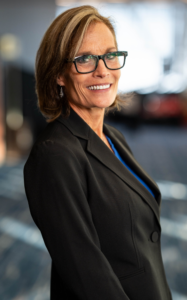
There’s a version of that night that most people only know from the headlines. Annette Mullin knows it from the inside — not as a headline, but as an officer, a mom, and a member of a community that watched its sense of safety crack open in real time.
In this episode of Her Story Unscripted, Annette shares the honest, unscripted story of being a Las Vegas police officer during the mass shooting on the Strip — the confusion of that first night, the employees she didn’t know were traumatized until the calls started coming in, and the choice to bring her own kids to a candlelight vigil so they could process it together as a family. She also opens up about becoming the first woman supervisor in her department’s homicide unit, nine years as a crisis negotiator, and the very human discovery underneath all of it: that everyone, no matter what they’ve done, just wants to be heard.
If you’ve ever carried something heavy while still showing up for everyone around you — at work, at home, in your community — this conversation is for you.
What We Talked About:
In this episode, Annette and I talk about:
- The phone call that pulled her whole department into response mode the night of the Strip shooting — and the employee who texted asking her to bring guns to the hospital, still not understanding it was over
- Bringing her own kids to a candlelight vigil so they could grieve as a family and as members of the community
- What it meant to be the first woman ever put in a supervisor role in her department’s homicide unit — and why she almost said no to the media coverage
- Nine years as a crisis negotiator, and the humbling first case where she believes the guy came out because he felt sorry for her
- The moment she realized every negotiation, every hard conversation, every conflict comes down to the same thing: people just want to be heard
Episode Highlights:
00:00 Introduction — Heather welcomes Annette Mullin
03:24 Annette’s childhood dream of becoming a coroner and how it led her to policing
07:32 Being an officer during the mass shooting on the Las Vegas Strip
09:45 Bringing her kids to a candlelight vigil to process as a community
19:42 Becoming the first woman supervisor in homicide
21:36 Nine years as a crisis negotiator and what it taught her about being heard
25:24 The transition to coaching with the Black Swan Group
39:39 Where to connect with Annette Mullin
Meet Annette:
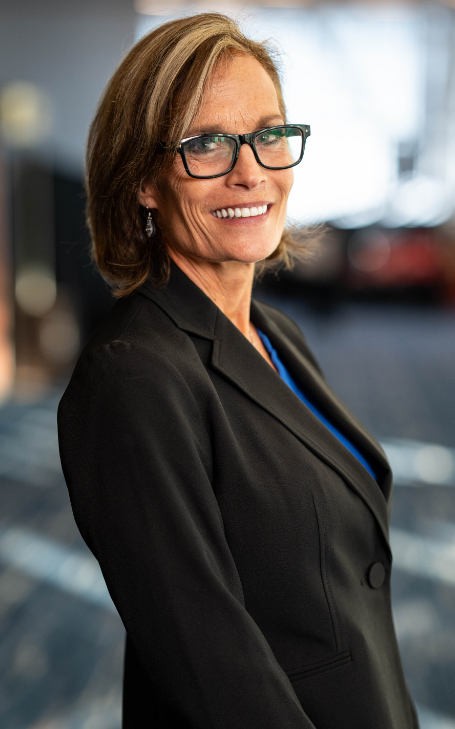
Annette Mullin retired from the Las Vegas Metropolitan Police Department (LVMPD) in August 2021, closing out a 24-year career in law enforcement. She spent more than 20 years specializing in Violent Crimes Against Persons, working across Criminal Intelligence, Sexual Assault and Abuse, Abuse and Neglect, Internal Affairs, Force Investigations, and Homicide. Annette served as a Crisis Negotiator for nine years and led the Crisis Negotiation Team (CNT) for two of those years. In 2018, she was promoted to Director and built the Police Employee Assistance Program, providing health and wellness resources to LVMPD employees and their families. She has also taught Sexual Assault Prevention, Sex Trafficking Investigations, and Domestic Violence Prevention around the world, with engagements as far-reaching as Vietnam and Budapest. Today, Annette is a Negotiation Instructor and Coach with the Black Swan Group, translating those high-stakes experiences into practical tools for leaders, teams, and individuals navigating pressure, conflict, and growth.
Full Transcript:
Annette Mullin: It meant so much, I think, just in the moment to kind of bring light. But everyone has their own experience, their own thought processes. It’s not me to tell you what to think. But if something’s happened and we get to interact, even if it’s negative, I want to know about it. I want to see your perspective. I can’t tell you how to think. I can only manage myself. But I’d love to hear about the experience and just understand why you think that way. Because even if we think differently, your perspective is your perspective. And you have every right to it.
Heather Nelson: Welcome to Her Story Unscripted. I’m your host, Heather Nelson, a connector, business strategist, and someone who truly believes that the most powerful conversations happen when we stop performing and start being real. This podcast is a space for women to share honest, unscripted conversations about life, growth, and the experiences that have shaped who we are. No perfectly polished narratives, no pressure to have it all figured out, just real, authentic stories told exactly as they are.
Hello, everyone. Welcome to Her Story Unscripted. I’m super excited to have Annette on the podcast today. Her and I have just connected virtually for the first time. Her background is so unique and so cool, and I just have so many questions about your journey and where you’re at now. So welcome to the podcast.
Annette Mullin: Thank you so much for having me. I’m very excited to be here.
Heather Nelson: I love it. So tell our listeners a little bit about what you do now, and then we’re going to dive into your journey through your career and life, and we’ll just get down to the nitty gritty stuff.
Annette Mullin: Sounds great. I am a coach and instructor for the Black Swan Group. The Black Swan Group is a group created by a visionary by the name of Chris Voss. He wrote a book called Never Split the Difference, which is about hostage negotiation techniques. How we got people to successfully, peacefully resolve a situation. Taping those techniques, and building them into the business world for business negotiation. So it was a bestseller from 2016. He’s a team of us that are all. Most of us are former hostage negotiators and other business negotiators throughout the United States, and we teach and coach people throughout the world.
Heather Nelson: That is so cool. I am so intrigued by what you do, and especially where you’ve been. I think that was when I got the email from you about being on the podcast. I’m always so inspired about everyone’s unique career choices and how they get into what they do. Yours was very, as soon as I saw that, I was like, yes, I have so many questions. So do you still live in Vegas?
Annette Mullin: I do for another week. I do. I live in Las Vegas, so yes. So I’ve been in Las Vegas for 29 years. I was a Las Vegas police officer for 24 of those 29 years. But I’m originally from the East Coast, Pennsylvania. But I came out here to Las Vegas because they were hiring, and it is the Las Vegas Police Department. It was then in ’97 was a progressive department, visionary, forward-thinking, smaller department that was growing. Because Las Vegas at the time was just getting so big, and so it was just a wonderful opportunity to be part of an organization that was growing. Amazing training, and I just have had it blessed to have been given the opportunity. And it was a fantastic career.
Heather Nelson: I love it. So when you were growing up, everyone asked the question like, what do you want to be when you grow up? Were you like, I want to be a police officer.
Annette Mullin: First, I wanted to be coroner. I was watching a show called Quincy, and I’m like, I want to be a coroner, right? And as I started to go to school, I realized that, okay, coroners have doctors. I don’t know when to do that, but the investigation was really intriguing to me. I was a Nancy Drew reader from a young age. But I don’t have any police officers in my family. It was just something through the media, really that kind of introduced me to the idea of doing police investigations. And so I always kept it in the back of my head, what can I do? And I thought, maybe I’d go into a criminalistic crime scene. Look at that first. So I went to advanced schooling. And while I was there, the Las Vegas Metropolitan Police Department came out and recruited me. And at the time, I was living in LA. And the dean of my school said, look, Las Vegas is growing. You can still afford housing there. You’re not going to have a two hour commute there. Just all these great things about Las Vegas.
So I came out here, and it’s just a city that never sleeps. I was really fortunate because it was a growing police department, and I had the opportunity to work somewhere new every few years. As I look back now, I had a dream career. Everything from working patrol and just seeing the world, you couldn’t believe the things that were happening in front of you as you’re trying to help people solve problems. But seeing the city grow, being able to work in straight investigations, sex crimes, internal affairs. I got to work at the police academy, helping training new officers. I got to be a hostage negotiator, which was incredible. Got to work in homicide. And at the end of my career, the last place I was, was a place called the Police Employee Assistance Program, where this place was to help officers find help. Because officers, just like everyone else, go through divorce. They go through stress. It’s really stressful to be a cop. There’s an officer involved in shooting. We had just had a horrific incident, the Mandalay Bay shooting happen, where so many people lost their lives. And so really helping officers find resources so they could heal, so they could thrive, so they get help for themselves and their family. So it was an honor to work there for my last four years. But I learned so much about just communicating with people, and trying to help people right where they are, and find places so they could heal.
Heather Nelson: So you were an officer during that shooting?
Annette Mullin: I was an officer during that shooting, yes.
Heather Nelson: I was there for a work conference, not for the concert, but for work in the event industry. So it was a work industry event, and I’ll never forget that day. I get chills thinking about it. I actually have had a survivor from the concert on my podcast because she’s here locally to me and a good friend of mine, and what an experience to be. I could see it from our hotel room. I could see what was happening from the hotel room because I was at MGM. I’ll never forget the amount of cops, police and sirens. It was insane. And being in Vegas, I’m sure everyone has been to Vegas, it’s lively and fun. People go to have a good time, and go to shows. And this is a carefree place. And then that weekend was just a whole nother experience. I couldn’t even imagine what it was like being in your shoes and going into a situation like that.
Annette Mullin: I can’t imagine being a tourist/work, and then this thing unfolding, and having to manage the rest of your week. I really can’t imagine what that was like for you. How startling.
Heather Nelson: Yeah. We had heard the gunshots. I always tell people it sounded like they were jackhammering. But I was like, why would they be jackhammering at 9:00 o’clock at night? Or it was later in the evening? And then we saw the police, and then we didn’t really realize what was going on. And then I woke up to a massive amount of texts from family, and they’re like, oh, my god, you’re in Vegas. Are you okay? I didn’t realize the magnitude of what had happened. And it was wild. So you obviously were on scene and part of that. What was your experience like?
Annette Mullin: I was not on scene. I was actually at home. But we, as part of the whole agency, mobilized pretty much based on where you were, what you were doing. So part of my response the next day was to be on the strip to manage just all of the people keeping them away from the actual scene itself. That scene lasted for days. I didn’t actually respond as an officer. Where I responded later was in assisting officers to get help. But what was so interesting is that we are, as the day was unfolding, like you said, you are learning and understanding the magnitude because it doesn’t make sense, right? When you are hearing about like, oh, because you hear mass shooting in, or you hear a shooting, you are like, okay, you get immune to it because you see them in the news and all that. But as it’s unfolding, you realize not only did I have employees that were attending the concert, I had employees that were working the overtime in the concert and not understanding, because everyone had to come in, and then trying to understand. I actually woke up to a text from my employee asking us to bring guns to the hospital, and I was so confused that she had been at the concert now helping people at the hospital. But in her mind, it was still happening that they needed guns at the hospital, and they were trying to get them.
So just understanding, I have traumatized employees, and you have a whole strip that people don’t realize anything’s going on. So you’re watching people still gambling. As you’re learning what’s happening on the actual scene, talking to your peers that are out there, you’re like, wow, the city’s still continuing. How is this even possible? So my takeaway from that day was just kind of watching the confusion, trying to understand what was happening. But I have young kids, and my kids are telling me getting texts that they have friends at school whose parents haven’t come home yet from the concert, so they’re trying to figure out. It’s going to make me cry. Figure out what’s going on. And so I remember when I did get home that night, I brought my kids. Our church had a candlelight vigil just to help people. And I’m a single mom, so bringing my kids there so we could just process what had just happened as a community member.
Annette Mullin: But the interesting thing about Las Vegas is we saw afterwards this community just came together no other. We had a new hockey team in town called the Vegas Golden Knights, who are big now. We won the Stanley Cup, but they were brand new, and they were going to have their first. Well, they’re the first ones showing up with food for officers, food for families. They’re at all the blood drives, so seeing these other people help us heal. But it was incredible to see for such a transient town how people came together, how people supported each other. I felt my kids got to see the best of this community. And as the year went on, my kids went to an art school, and the last event of the year was where the kids could present what they’re feeling through art. And most of the kids had a mentally based story, and it was like, wow, these kids are affected. You imagine as adults that were affected. This is all of their safety, all of their lack of control. So really, to see them be able to work through it through art, I think was really healing for everyone. It’s such a horrific time for our city, but also such a bright time for our city to see how people responded. So I feel grateful for the outcome to see that the best in people always shines through even during the darkest times.
Heather Nelson: Wow. I was going to ask you, when you’re talking about, what you’re doing now. I was going to ask, you do have kids, so you had children, obviously, while you’re in the police department. What was that like being in such an important job and role in your community, and also raising children? You’re seeing the worst of the worst, because you see the
crime and all the things that not many people get to talk about. How was that being a mom at the same time?
Annette Mullin: I think I sometimes feel bad for cops’ kids because those poor children, when my kids got cell phones, were reviewed every day. All like all their texts were gone through. I mean, because we do see the worst. And remembering sometimes of like, hey, it’s not us versus them. It’s realizing that most people are wonderful and good. We are seeing the minority, and so making sure I was aware of that when I was concerned for my kids. Just like any other parent, you’re managing work, you’re managing kids, having a good community around me always helped. I think that when my kids were young, they were really proud that I was a cop. There was career day at school, bring the car. That was really cool. You saw that change as they became old. I was like, Mom, can you not show up to school? It’s embarrassing. It’s difficult being a teenager. I’m really low. So that was like learning that there’s a time and a place, and that time had passed. But I think my kids were really proud. It was really nice when I retired. My kids got to speak, and I got to hear just some of it through their eyes. But I think I always remember, and I just want to be a good role model for them. I think that both me and their father were able to do that. He’s a police officer as well, to show to be a good community member, and it’s a difficult job. But trying to remember not to talk work around them because they soak in them. And just being aware that sometimes, I have to be careful and monitor because the world is sometimes not a safe place. But I want them to feel safe in this world.
Heather Nelson: I don’t prep any questions, so if there’s anything I ask you that you’re like, nope, I don’t want to talk about that. I’m curious, because I would say that in the last decade, there’s been so much stigma around police officers and how they handle situations. You’re not active anymore, but I’m sure you are part of that. What do you say to the people who feel some type of negative way toward police officers, sheriffs, anybody in law enforcement?
Annette Mullin: It’s interesting. Being a cop has so many responsibilities. You really are responsible for how you act, how you hold yourself. I do remember as a cop when there were times we would have to arrest parents. I would do my best, how can we do this on the children? Because this is what they’re going to remember. You take mom and dad away, how you respond to them is important. I just really remember that it was an important piece even before I had children. They’re growing up in it in a way that I hadn’t grown up. The world’s very different, and this is a really difficult thing that we have to do. So just trying to monitor myself, manage myself so I was a good role model. But also aware of this, it is affecting their lives. There were homicide scenes where if you got young kids around you, realizing the devastation that this is going to cause. We would do everything we could to help them. Just bring some joy just in that moment even if it was some simple things such as, gosh, I remember, we would blow up the little gloves to make like a turkey. Things like that for kids, it meant so much just in the moment to kind of bring light. Everyone has their own experience, their own thought processes. It’s not me to tell you what to think. But if something’s happened and we get to interact, even if it’s negative, I want to know about it. I want to see it from your perspective. I can’t tell you how to think. I can only manage myself. But I love to hear about the experience, and just understand why you think that way. Because even if we think differently, your perspective is your perspective. And you have every right to it.
I think one of the great things about working for Las Vegas Management, I will never say enough great things about this agency, is we’re very forward-thinking. So when some of the social unrest had become more apparent, they had done a news article with what’s called the Review Journal about all the police officer shootings since the beginning of Las Vegas Metro. We were two agencies, and then we came together from the beginning to the current time. And because it was computerized, you could click through them really fast. And boy, it is just so unsettling when you see that our sheriff saw that article and didn’t like it. He didn’t like what it could mean. And so he went to the U.S. government and said, he went to what’s called cops and said, look, I’m concerned. I don’t like seeing it this way. This doesn’t look good. I don’t know if we have a problem or not. So we brought them in, and they did a six month review of our agency.
Everything from training to how we use force, how our academy is run, how investigations are done when there is a force incident. And they came back with what’s called the collaborative reform of the Las Vegas Metroid Police Department, and there were 100 recommendations, I’m guessing. And the sheriff said, we are not going to pick which ones we’re going to do. We are going to do them all no matter how painful it is. We are going to progress forward. And he, to that point, was really big in the community. Making sure there was multicultural influence that he was meeting with to understand. So they supported us in this. Our communities did, and so we didn’t have the unrest that was seen in other places because we were so transparent. Here’s where we are. Here’s where we were. Here’s where we are. Here’s where we want to go. It doesn’t mean we’re perfect. But by doing that in Las Vegas, we really gave a voice to those that hadn’t been heard.
We gave a voice to those that had concerns, and we made progressive changes even though they were hard to see and hard to understand as an officer at the time, because we did them all, they were done. And you went with the program, and so we saw vast improvements. I feel how we handled things, de-escalation, bringing the cameras, body-worn cameras on. I think it speaks a lot to how we handled what could have been a really bad situation because we were forward-thinking. Your original question is, I like to hear about other people’s experience because it is their experience. There’s always something to learn, and there’s always a way to improve your process.
Heather Nelson: I think too with media, the way that media is like, we all, as community people are only hearing the bad. Like there’s an officer shooting or the officer killed this person, and that’s all we’re seeing. But we’re not seeing all these departments and agencies that are actually doing really important great work. And understanding. I can’t even imagine having that job and having that responsibility. And you guys going on onto a scene that you have no idea, do they have a gun? Do they not? Who’s involved? What’s those circumstances are? You’re risking your own lives to save, protect all of us. But then, I have a hard time hearing people badmouth the police department. And of course, there’s going to be bad eggs and everything. With any type of job or industry, there’s always that. But give you guys some credit to the hard work and what you guys are up against every day.
Annette Mullin: And the nice thing is our agency offers a lot of opportunities for the normal citizen, whether it’s the Citizens Police Academy. You can go through it and kind of understand. But also, we even have something called the Mob Museum here. It’s a really cool museum in downtown Las Vegas, but they have like a shoot, don’t shoot, that you can put yourself through so you can actually see what you would do, how you would respond. And I think when people get to be put in that situation where they realize you’re reacting to what is going on in front of
you, they see how difficult those decisions are. When you can put yourself in the shoes of someone trying to make that decision, you realize that it is not easy. And as we are recording this in early August, we just had an officer killed yesterday, and ambushed yesterday. It’s a very dangerous job. It’s unfortunate that force has to be used. But we’re always looking for the minimum amount of force used to gain compliance. And sometimes, deadly force is necessary. But our agency will review every shooting afterwards to get better, to impose discipline if necessary. But most importantly, to ensure that we all learn as an agency what has happened, what others have faced. So if faced in the future, we can make as good a decision as possible.
Heather Nelson: What was it like being a woman in the police department? Because there’s not very many of you out there doing that work.
Annette Mullin: When I first came on, there were fewer. I was blessed that I had some trailblazers ahead of me. I definitely did. I think Deputy Chief Kathy Suey just created something called the Women of Metro to encourage other women that were in the police force to support each other. I just had such great role models ahead of me that really did the real tough work. I went into the academy and said, I’m going to work as hard as I can. I’m not going to be good at everything in the areas I’m weak at. I’m going to really work hard and keep my head down. So I tried to do it. But I never let being a woman affect me, either good or bad. So like I said, I think the work was done ahead of time that women were definitely accepted in the police force. It was when I went to homicide, they were going to make a really big deal that they were bringing the first woman supervisor to homicide. The local media wanted to do a piece, and I fought it. I said, I don’t know if I want to do that because I don’t want to put myself out there. And the director of public information came to me. She says, this isn’t about you. I get it. You don’t want the guys to give you a hard time, which they would naturally do. This is about young girls out there that don’t know they could be a sergeant in homicide. They could be a lieutenant. They could be the sheriff. We need you to do this so they can see that that pathway is possible. And I’m like, all right. That makes a lot of sense. So I did the piece. I felt that was interesting, why would it be news? That it was the first one. I don’t know, but it made sense why we would do it to encourage others too.
Heather Nelson: 100%. I love that. I would love to read that. I think that’s so cool. I have one more police department question, but I think it’ll tail into what you’re doing now, the work you’re doing now. You are a hostage negotiator. What is that?
Annette Mullin: Okay. So super fun.
Heather Nelson: I have a good feeling I know, but I want to hear it from you.
Annette Mullin: Hostage negotiation or crisis negotiators, we as a team respond with SWAT when someone is barricaded. Meaning, there’s a crime that’s committed and they’re not coming out. Maybe they’re suicidal, and so we need to check and see if they’re okay. Or they literally have hostages. So we are a team that comes out, and we’re the people that talk to people to try to encourage them to come out. We always have SWAT. You always have force there in case it’s necessary. But our goal is to get on the phone or person face to face, and figure out what’s going on. How do we get in? How do we get you out peacefully so nobody gets hurt, and we can resolve the situation? It was a fantastic position. I did it for 10 years, and I led the team for two. It is a part-time gig in Metro because you would have your normal job. But when an incident occurs, you would respond out as a team, handle the situation, and then go back to your normal job.
Heather Nelson: What were your negotiation skills like? Were you 100% successful? 90% successful?
Annette Mullin: So overall, here is a stat for you. Overall, across the United States, with 100 being, everyone comes out because they taught you how often you think hostage or crisis negotiators are successful. Just give me a number.
Heather Nelson: I was thinking 90. That’s what sat with me.
Annette Mullin: 93, 94 % is the national average. So yes. So successful? No at times. People made the decision to take their own life before they came out. That’s their decision. But other than that, there were times when SWAT had to go in. That 7% where they’re like, we’re not coming out. Well, we still need to affect the NRS. We still need to make sure everyone is safe. We still need to make a decision so they will go in. So that’s kind of how it went. But yeah, it was really a lot. It was a lot of fun to do. My first hostage negotiation that I had to be part of was a guy that had robbed a bank, was holed up in a hotel. I’m on the line for the first time, and I’m really nervous. So you have a coach with you that’s helping you work through it, and I was absolutely awful. I think the guy came out because he felt sorry for me. It was really hard to get good at the crisis negotiations. Literally, I think he came out because he’s like, she’s awful. This poor girl. I feel bad for her.
Heather Nelson: But at the end of the day, people just want to be heard just like anybody in the world, right? We’re dealing with a mental crisis. There’s something that’s personally going on. And if you have someone that is actually paying attention and wanting to hear and talk you through it, that’s what everybody wants in life. So I would imagine if you can just do that, get them to trust and feel comfortable with you, that’s how you’re successful.
Annette Mullin: That is how crisis negotiations work. It is truly that everyone has an innate desire to be heard and be understood. If you can provide that, if you can actively listen, not show judgment, because really, what do I have in common with someone that’s just robbing a bank? Very little. But there’s a reason why they’re there today. And if we can get that, if you can get them talking so that all of a sudden their stress level goes down, their logical thinking goes up, and it makes sense. Hey, there really is only one avenue out of this. It’s not probably the one you wanted. I’m not selling you a vacation. I’m selling you jail time. But there’s a way we can work through this together. And it’s when you do that, you build that trust-based influence, and so they can make it. The courageous step to come out and kind of face the music.
Heather Nelson: So because of all this work and this training that you’ve done through, that has now put you to where you’re the work that you’re doing now. Correct?
Annette Mullin: Absolutely.
Heather Nelson: Talk about that transition. What was that moment in your career when you wanted to retire or were you forced to retire? Like, how was that transition for you?
Annette Mullin: Transition retirement was an interesting one. I have twins that were starting high school, and I wanted to be there for it all. Because as you know, 20 years of calling out, there were things that you’d miss. I just didn’t want to miss anything during the high school year, so I chose it 24 years ago. I’m like, it’s a perfect time. Actually, yesterday was my five year anniversary of retiring. So just in time for the school year to start, and it was great. I said, I’m not going to work for a year. I’m going to heal from what I’ve seen, from what I’ve dealt with. I’m just going to take a breath and just enjoy the kids. And that lasted about 8 months when I was always on the go. I felt I had recovered. I was ready to have some more purpose than just being
a new Uber driver. And because that’s what I felt like. I was just taking kids to events, and I wanted some more purpose. So I started to look for different things.
I was working as a private investigator for a law firm. And when the opportunity came to work for Black Swan, there were two other crisis negotiators from Las Vegas Metro that worked for Black Swan, Dennis Flynn and they encouraged me to apply, and I got to meet Chris Voss and Derek Gaunt, Sandy Hine, Troy Smith. Incredible others that had done the work, and I really realized this is a company I could get behind. Chris Voss was an FBI lead negotiator. I ran the team. He’s been all over the world helping people effectively resolve situations. And he wrote this incredible book that made so much sense to me where it was all about, instead of pushing your agenda first, is making it about the other person first, this tactical empathy, learning about them first. And once you do that, once the people feel heard and understood when you verbalize what they’re saying, gosh, you just can move mountains because you’re working towards collaboration. So it’s been a great journey to be on. I love coaching. I love instructing and meeting people from all over. Like you had said earlier, just getting to see people where they’re at, learning about their jobs, what they do, what they need, how to get better, being able to encourage people and help support them in that vision to get better, it’s just been a great, dream job.
Heather Nelson: But this company doesn’t just focus on law enforcement? It’s leadership in any industry.
Annette Mullin: Absolutely. We coach all over the world. And it could be a CEO, it could be a teacher, it could be someone starting a new business. The business doesn’t matter. Any time you have a want or a need, you’re in a negotiation. So realizing that you can use tactical empathy first. Learn about your counterpart first. Verbalize what they’re all about so you can understand what they need, and then you can craft your own based on what you’ve been told. So it’s really neat that it just encourages folks, people that make gazillion dollars, to help them get better. It’s a fantastic feeling. And to a person that’s just starting out, how to encourage them to grow their business. It’s a unique opportunity
Heather Nelson: It’s interesting. Because when you start a business, because I also own a business, some people do it because of the leadership. They want to be in charge, and they want to run a team. But a lot of times, when you start a business, it’s because there’s a passion there for whatever it is that you’re starting. Whether it’s a a product or a service, there’s a reason why. And then as you grow, you’re like, oh, gosh, now I need to have employees. Now, leadership wasn’t my strong suit, but I have to lead this team. It’s a hard thing, and it’s not something that is easy for people to just kind of pick up. So I love that there’s support out there for that.
Annette Mullin: Absolutely. It’s learning about each employee as an individual. Even though you both may have the same passion, so that’s why you’re both in the same field of work, in the same areas, you see things differently. And it could be just based on their conflict personality type. Until you know what their conflict is, you don’t even know how to speak their language, how to speak to their basic needs because you don’t see things the same way. Even growing up in the house with the same people, same parents, same schooling, you still see things really different. And so once you recognize that, it can speak to how they manage conflict, or speak to how they have their needs, then you can actually move them towards, trust towards, and then you can use your trust based influence to get them across the line. I think that’s really important, especially as you’re taking on new employees. And as you’re growing, to really learn about them as individuals and how you can speak into their truth so they can grow.
Heather Nelson: That’s so good. I think the one thing for me, at least, because I do run a smaller team for leadership that’s hard for me is like, I don’t like conflict. I know there’s a lot of people out there that don’t like conflict. So if something happens, you’re like angst because you have to have this conversation about why this was good, or why this was bad. Do you have advice for people who are sitting in that space of conflict? It’s actually a good thing. And I know this because once you have the conversation, you feel relief. But then also moved things in a positive direction. But how do you get through that initial fear?
Annette Mullin: Well, two things with this is we use something called the accusation audit. When you want to have difficult conversations and it’s letting them know before you get into that conversation, you’re thinking about everything that the other person is thinking about you, the good, the bad, and really important, the negative. What are they thinking about you? You probably think that I’m an awful supervisor. You may even think that we have no business talking about this. And just getting into that, using those accuracy not to get into what they’re thinking first and then saying, would you be against us sitting down, having a conversation about A, B, C, or D. Putting in the work ahead of time to realize that you’re trying to relieve them of the pressure of the stress as well. So using that on it, but realizing that the fear of loss that your employee or peer has is the biggest motivator of human behaviors. That fear of loss in which you can figure out, what is the fear that they have? What’s behind the behavior? What’s behind the conflict? If you can dig there, then you can get towards what the identity issues are.
What’s first in addressing those. Because negative emotions don’t go away if they’re unexpressed, if they’re not out there and we need to get those out. But it’s overcoming our own fear of that difficult conversation. The goal in the end is good. But when you realize that this is a hard conversation, you realize that this is hard, but the goal is getting better. It’s received more. You’re kind of working on not only relieving your own brain of the pressure, but the other side’s brain as well. You’re trying to connect with them so they can be receptive to it. It’s never easy to have the default conversation. But if you can have it, you’re both going to grow. You’re going to look back on and say, all right, it’s never as bad as we think. But just getting it out of it at first. But I think hitting it head on, especially when there’s something negative, is saying it first versus waiting. Because when you wait to bring out that elephant that is just sitting there and you’re not paying attention, they’re not paying attention, all that negative unexpressed emotions there. Getting it out first, I think, really relieves both sides of the pressure so it can be discussed and handled, and then follow up as well. Like, hey, seems like this was a difficult conversation to have. Checking in how they’re doing, and just giving them the space to talk to you about how they felt about and how they feel moving forward.
Heather Nelson: That’s why I always say, the more honest you are on how you feel, or just having honest conversations and being authentic can move the needle in so many positive ways. You have to say something differently, and I’m like, no, just say the truth. And I tell this to friends, people always call me for advice with consulting, they’re like, ah, this client, or I’m working with this vendor, and I’m having a hard time. I’m like, just be honest. Tell them their reality. I’ve had conflicts. I’ve had a call back to my rental days, having hard conversations with people. And I felt the more honest I was and gave them the reality of life, this is why we do this. This is what happened. And being honest, it always went the way that I wanted it. And it was like, okay, that wasn’t so bad.
Annette Mullin: Absolutely. Because the moment that you don’t tell the truth, and all of a sudden, you’re not trustworthy, and that’s the last thing you want to do because you’re ruining a long term relationship where you can have really difficult conversations. You can be really assertive. It’s how you approach it. It’s your tone you use. It’s the words that you use that really make the difference. And letting people know, instead of just putting the bad news, just say, bad news is coming. I want you to be ready for this. This is going to be a really difficult conversation. Letting them know, hey, be ready for it. Brace yourself. And then here we go.
Heather Nelson: So you work with leaders all over the world, all different industries. Is there a common thread of leadership that you find is missing? Or like the comment when you’re working with a client that comes up time and time again that you can kind of speak on?
Annette Mullin: What I think is really interesting. We teach something called the Black Swan skills. We teach the core four, whether its labels, mirrors, dynamic silence, and summary. We can teach it. But if you’re not willing to put in the reps and to try it out, you can’t expect in those really difficult conversations to be able to use it. You need to do this stuff in your day-to-day walk of life for it to come across in the big things. We practice how you play. You have to do the work. What I find universal is, people will have all these degrees, and they don’t realize is you still have to practice. You need to role play. You need to prepare yourself for that conversation. Because once you do, like you said, the relief is there. You are successful in your head. Even if it’s just a role play, you have success. You go in with more confidence. And I think when we get to role play with a CEO, okay, you’re going to have this difficult conversation. I’m going to be an employee. Let’s go. And they’ll make all these mistakes. They’re human just like everybody else. But no, okay, I like how I did this. I didn’t like how I did this. Then we do it again. Just working through it, everyone wants to get better. But if you practice first, you’re going to be so much better than just doing it off the cuff. And what I always find to be really nice is how relieved they are. They’re all scared to role play because everyone hates it. But that’s how you get better. And that stress, even though it’s a role play, that stress is good for you because it’s putting yourself in the real situation. You’re going to be stressed, so getting that rep in, and doing it successfully really helps everyone. So that’s what I really enjoy. Role play is universal. Practicing beforehand is universal. If you just do it, you’ll come out so much better on the other side.
Heather Nelson: So good. So good. You have quite the experience. I think I mentioned that I just love how you were so involved in this career of being in the law enforcement world, to now find your little thread that can come out of it, that you can lean into. And I say, we, as in conversations that I have with other women, we love what we do so much. We thrive off of it. And we’re experiencing it, but we’re feeling like there’s more for us. And how do you pick that one thing out of what you’re so good to go down the path to this new space. And so, I love that. That’s what you’ve done, and it’s inspiring to hear that. Okay, we can do this. We can do hard things. We can be invested in a career, and finding something on the other side that’s still relatable, but using the skills and experience that you’ve had before.
Annette Mullin: Yeah. It’s about finding your passion. Because passion, you feel purpose, you feel fulfilled, and it’s not work, right? I think like you is when you get to and help others, learn about others, see other people grow, I say, gosh, it’s selfishly satisfying. It really is. But they’re doing the work. You’re just providing a pathway with your experience. Like I said, if you find your passion, work is just so easy to do because your purpose is there.
Heather Nelson: So good. Is there anything we didn’t talk about through your career, through your life that you think somebody would be inspired by.
Annette Mullin: I think we’ve talked about so many things. I just think that for women, courage is always the first step. Taking that first step to the unknown. But I think in this day and age, find your tribe. I have a group of women and men. But a great group of women around me that I can go to, that I can be real and authentic with when I’m failing, and they encourage and lift me back up to keep going. The courage isn’t always getting up. The courage noise is, tomorrow, I’m going to do better here. I’m going to make mistakes, but I’m going to get better. And knowing that your tribe is there to support you, I think is really important. Just be courageous, be bold, be audacious. What is your vision for a happy life? Take that first step. Even if you have to take eight steps back, keep moving forward because there’s the joys there. The joys in doing the hard things once they’re done. The joy really is there, so just keep going.
Heather Nelson: I love that. It is so interesting that that is what you said. Because right before this podcast interview, I just texted six women who are in my life who either see me for who I am or challenge me, and I just invited them over for lunch because I felt like we needed some girl power. We’re all in this stuck space of like, what’s next for us? And I was like, I’m gonna bring them all together. I literally just texted all of them.
Annette Mullin: I’m happy for you that you have that too. That’s fantastic. Oh, it’s great, especially to be authentic. It is so easy to be authentic. It is so easy to like, everything’s great, happy, happy, joy, joy. It’s really wonderful if people that you can let them, hey, this is where things fall. Or they can say, hey, this is where I need support. Or this is where it’s not going to have those sounding boards. So wonderful. I love that.
Heather Nelson: That’s so funny. It’s meant to be. I love it. Annette, thank you so much for reaching out and wanting to be on this podcast, and sharing your story and your journey. I absolutely loved this interview. I’ve written down a few notes that really stuck with me, and so I know that this episode is definitely going to inspire others. Thank you so much for being here.
Annette Mullin: Thank you for the opportunity. Thank you for what you’re doing. It’s bringing so much joy to others. So thank you very much.
Heather Nelson: Thank you.
That’s a wrap on today’s episode of Her Story Unscripted. Is something you heard today made you feel a little more seen, a little less alone, or just got you thinking that’s exactly why we’re here? If this episode resonated with you, I’d love for you to share it with another woman in your life who needs to hear it. And if you haven’t already, make sure you subscribe wherever you listen, or catch us on YouTube so you never miss a conversation. I’m Heather Nelson. Thank you for being here, for listening, and for showing up for real stories. I’ll see you next week.
There’s a version of your life you build for everyone else — and then there’s the one you finally build for yourself. For Mercedes Hernandez, getting to the second version meant walking away from a 15-year relationship, living alone for the first time in her life, and sitting with the kind of quiet that most of us spend years running from.
In this episode of Her Story Unscripted, Mercedes shares the honest, unscripted story of how she went from a 15-year-old retail worker with no direction, to opening her first brick-and-mortar at 20, to building SoCo Markets into one of Sonoma County’s most beloved community events — and what was happening behind the scenes all along. She talks about co-dependency, identity, the grief she processed while still inside her marriage, and what it actually felt like to choose herself for the very first time.
If you’ve ever stayed in something longer than you should have because it felt safer to stay, or if you’ve ever lost track of yourself inside a role — as a partner, a business owner, a daughter, a people-pleaser — this conversation is going to feel like someone finally said the thing out loud.
Episode Highlights:
- 00:00 Cold open — Christina on the invisible clock
- 00:49 Heather introduces Her Story Unscripted
- 01:15 Welcoming Christina back — three years and a lot of life later
- 02:21 The normal weekend that wasn’t — Curtis gets sick
- 5:28 The ER visit and the diagnosis — glioblastoma
- 7:15 Choosing chemo and radiation — a hail mary for a 44-year-old in perfect health
- 12:18 How quickly he declined, and what caregiving looked like at home
- 14:18 Curtis’s death in March 2025 — four months after diagnosis
- 18:55 What helped Christina survive this season
- 22:13 The termination email the night he died
- 27:22 200 pounds lost — and how the GLP-1 journey intersected with Curtis’s care
- 25:10 How to actually show up for someone in grief
- 36:10 Life now — Addie, memory-keeping, and saying yes
- 38:03 Christina’s one takeaway for the listener
Meet Christina Alonzo:

Christina Alonzo is a mother, content creator, and Sonoma County local who has walked through more grief in the last few years than most people face in a lifetime. From losing babies to navigating a sudden and devastating brain cancer diagnosis in her husband Curtis, she has shown up with remarkable honesty and grace at every turn. In the past year and a half, she has also completed a transformative 200-pound weight loss journey that changed not just her body, but the way she moves through the world. She is raising her daughter Addie with Curtis’s love still at the center of their home
Full Transcript:
Christina Alonzo: We only get one life, and we don’t know when that invisible clock is gonna run out, and so you have to make time for people and for things that are important to you. And I am not wasting any more time worrying about things that aren’t necessarily important. And yes, I need to make sure that I have money to pay all my bills. But I’m also not stressing out about eating at a restaurant that costs a little bit more money, or buying Addie, something that is frivolous or whatnot, because I want to enjoy the life that we have here, and we’re not going to take it with us. We can’t take anything with us, and so we’re going to enjoy the time that we have, and make those memories.
Heather Nelson: Welcome to Her Story Unscripted. I’m your host, Heather Nelson, a connector, business strategist, and someone who truly believes that the most powerful conversations happen when we stop performing and start being real. This podcast is a space for women to share honest, unscripted conversations about life, growth, and the experiences that have shaped who we are. No perfectly polished narratives, no pressure to have it all figured out, just real, authentic stories told exactly as they are.
Hello, everyone. Welcome to Her Story Unscripted. I’m so honored to have Christina here. Christina was actually on my previous podcast. I looked it up, and it was almost three years ago, March of 2023. So much has happened in your life. One of the things that I really wanted to have you on again, not only because you’ve been through a lot, but your story has always just been inspiring to me. I think you and I had met, and you were on the podcast around influencers, and you know that world, and how you’ve navigated that. And you also have gone through three deaths with little children, babies and all of that. So if anybody wants to go back and listen to that, that is an incredible story in itself. But you’ve gone through a lot in the past three years, and you still show up. I know you probably have your ups and downs in life, but you’ve always stood out as someone inspiring to me. I was like, I have to have her back on the podcast and hear all about what you’ve been up to, and how you’ve navigated such a hard time in your life again.
So Christina, welcome to the podcast.
Christina Alonzo: Thank you. Thank you for having me. Yeah, it has been quite an adventure. So much has happened since I was on the podcast last. So I guess for your audience, if they want to go back and listen, we did talk about my boys in the previous podcast. But since then, we have navigated so much more. So in November of 2024, we received a pretty life-altering diagnosis for Curtis. It was just a normal weekend. We dropped Addie off at my mom’s, we did weekly date nights, and we dropped my mom off at Addie’s and went to sushi, and Curtis just randomly got sick. I thought he had the flu. And that weekend, he just seemed a little off. He said he was tired, he was sick, like stomach flu type sickness. And he said he just felt kind of off, kind of tired. That was Friday night. Saturday, I noticed that he was walking a little weird, but he said he was just tired. And each day, there were just things that seemed a little off, and I had said I wanted him to go to the doctor. And he said no, he was just tired. And he went to work Monday morning, and my gut just said that something was wrong.
And Tuesday, I tried to get him to go to the doctor, and he would not go. And Tuesday night, he put our daughter to bed which he did every night. He said her bedtime prayers, and they did not make sense. And of course, she was little, and she didn’t notice anything. But I did. We came out of the bedroom and I said something was wrong. My background is in senior care. I was the executive director for Senior Living Community for quite a while, and I said, I’m not trying to be mean, but you are showing signs of somebody who possibly had a stroke. And I said, we need to go to the doctor. And he’s like, no, no, no, I’m fine. And we went to bed that night. And Wednesday morning, I said, we need to go to the doctor. And he’s like, no, I have to go to work. They need me, blah blah blah. And I said, if something is wrong, you’re not going to be any good to anybody. We need to go to the doctor. And he’s like, no, I have to go to work. And he went to work. And all day, I felt sick to my stomach. I knew something was wrong. I had called my mom and I was like, I have to get him to go to the doctor. I know something is wrong. And so I brought my daughter to my mom’s house. And when he came home, I was like, we need to go. I’m hoping that they just tell me that I’m crazy. But something is off, and we need to go. And he said okay.
And we went to the ER, and the doctor’s like, why are you here? And he was like, I don’t know. I’m fine. I told the doctor everything that I had been noticing, and I went back Friday, and told him the symptoms. And the doctor was like, sometimes when men show these symptoms, it could be a UTI. And I was like, oh, I knew that. I worked in senior care. I knew that. And then I was like, oh, he just has a UTI, duh. It’s easy. And they ran a bunch of tests, and the doctor came in and said, I’m sorry, but we found this massive brain tumor. We are going to transfer him immediately to San Francisco. They started him on steroids, sent him to San Francisco and did a biopsy because they suspected that it was cancer. But they had to do the biopsy first. And sure enough, it was glioblastoma, which is brain cancer where his tumor was located, and how it infiltrated his brain. The tumor in his brain was not operable. So with glioblastoma, even if they could have surgically removed the tumor, it’s not a matter if it comes back, it’s when.
So best case scenario with chemo, radiation and removal of the tumor, we were looking at maybe five years. We chose chemo and radiation even without surgically removing it, kind of as a hail mary. Curtis was young. He was 44 in perfect health. Other than that, he never even got a cold. He ran for fun. He rode his bike to work every day just because he wanted to. And so given his medical history, we thought that we should try. I thought we should try, and so we did. We did one round of chemo and radiation, and the cancer was contained. It didn’t spread anymore, which was good given how aggressive glioblastoma is. But unfortunately, that wasn’t enough. And from the date of diagnosis until the date of death was four months. Glioblastoma is very aggressive, and it was spread pretty much to his entire brain. It was a miracle that he wasn’t showing any symptoms prior to that weekend. What the oncologist and the neurosurgeon believed was that the swelling had gotten so bad, and that’s why he started to show symptoms. Typically, people find brain cancer because people are having headaches, or seizures, or losing balance. And remarkably, he wasn’t having any symptoms prior to that, or maybe not. Maybe if we could have caught it earlier, we could have–
Heather Nelson: How long do you think that he had had it? What was it that triggered it? But that would make sense, that it swelled.
Christina Alonzo: I believe now that he may have started noticing some symptoms in July. There are things now that I see that I didn’t see at the time. Curtis kept a journal, and he did write down a few times that something felt off, but he wasn’t sure what. And the first time he mentioned that was in July. Our son left for the police academy in July, and I went with him to move into his apartment that he was going to be living in during the police academy. Curtis didn’t go, and he had mentioned in his journal that we had taken Tommy to Chico, and that he had stayed here, that he was feeling really tired and off. Something fell off in his brain, but he wasn’t sure what that was. And so I believe that he started to feel different in July, but he didn’t know what that was. And then there were just other things now that make sense. You just chalk up to everyday life to work with small children and be good. Now I see that I just didn’t pay attention to much at the time.
Heather Nelson: And I feel like men are so, like you were saying, it took him a few days to even go to the doctor because they’re like, it’s fine, it’s fine. You’re like, no, something’s off. And it always takes them so long to be like, okay, let me go get help.
Christina Alonzo: And just like other things too. The kids and I talked about after, my birthday was in October, the diagnosis was in November, and he always made such a big deal out of holidays. He made everything so special. And every birthday of mine, he would decorate the house. He would go over the top with gifts, and he had been asking me what I wanted to do for my birthday. And I was like, nothing. Nothing, I don’t want anything. I don’t need anything, like. If I want something, I buy it. It was not a big deal. And he didn’t do anything for my birthday. This was the first time in 10 years he didn’t do anything for my birthday, and I didn’t think anything of it because I had said over and over, and over that I didn’t want anything. I didn’t need anything for my birthday, and so I didn’t think anything of it until after. And I was like, he would have never not done anything for my birthday. But I think after the fact, I thought about it like he didn’t think about it. It seems like after the diagnosis, I started noticing his short-term memory was all gone. I still play this game where I think about how long has his short-term memory been gone, and how much was just he memorizing, or how much was long-term memory because his long-term memory was intact. They told him he had brain cancer, that he wasn’t going to work, and he couldn’t retain that information, which almost was a blessing in disguise. He knew who we all were. He could tell you dates and things from the past, but he had no short-term memory.
Heather Nelson: In the four months, what was life like? Was he able to be bedridden, or was he able to go out and do things?
Christina Alonzo: He declined very, very quickly. So the day we went to the ER, he drove himself to work and home. He went in, they took him to UCS to, I can’t remember, we’ve had so many hospitals. He went to San Francisco to CPMC and had a brain biopsy. And it seems like once they messed with the tumor from there on out, he declined. He had trouble walking. His balance was really bad. He ended up having two massive seizures. He ended up with a pulmonary embolism. He declined very, very quickly. The chemo and the radiation did a number on his body, so he really didn’t walk much again. Maybe with my assistance, he could walk a little bit for maybe the first two weeks that he was home, but I mainly provided all care for him. He was at home. He was in and out of the hospital quite a bit, but he was mainly at home. With the brain biopsy, he spent like four days in the hospital. And then after the seizures, he spent a few days in the hospital. But he was mainly at home. And then when we found out about the blood clot, he was in the hospital for a few days, and then we brought him home. After that is when we chose to just do comfort care instead of continuing with the chemo and radiation. And then once we chose that, he was only in hospice for four days before he passed. And that was in March of 25.
Heather Nelson: If somebody was listening to this right now and is going through something like this, what advice, or what were some of the things that helped you get through this time?
Christina Alonzo: I think just taking in every moment that we had, even as hard as it was to watch him go through what he was going through, it was an honor to be able to take care of him at that time. I know that he would have done it for me in a heartbeat. I told my older kids that it’s a good lesson that you don’t marry somebody unless you’re willing to change diapers, feed them, give medications around the clock, and hold their hand while they are literally fighting for their life. Because it is hard to watch somebody you love go through something like that. And also take care of a toddler who does not understand why their dad, who was so full of life, can’t talk. She would say, why isn’t Dad talking to me? She would ask him to put on her shoes, and he physically couldn’t do it, and that was so hard for her because she didn’t understand why he couldn’t do it. Navigating her grief on top of my own, and going through it in real time, there’s always that question, is it better to have somebody die suddenly or watch them die? There’s no right answer. We went through it, we watched him go through it, and it was hard to watch somebody so healthy and full of life lose that.
And there was moments of clarity, like I said, I think there was like a blessing in disguise that he didn’t understand what was happening because I truly don’t think his heart could have handled knowing how much in pain that we were all in because there was nothing he wanted more than for all of us to be happy. Everything he did was for all of us, and so I don’t think that he could have handled it. I think he wouldn’t have cared for himself properly if he knew how much it was hurting us. But there were moments of clarity, like a couple days before he passed, he said to me, he hoped that I knew how much he loved me and how much he was going to miss me. And that for me not to be jealous that he was going to be with our boys. There were moments where he understood what was happening. But man, it was a lot. But I think given the nature of my job, I was able to spend every minute with him. I was able to be there with him, and be the one to take care of him. He didn’t have to go to rehab. I got to be there in the hospital with him, and I got to be here at home and take care of him, and so I’m grateful for that as hard as it was.
Heather Nelson: You kind of spent that time with him before. You’ve been through a ton of grief. My heart, I just get chills listening to your story and knowing what you’ve been through. Is your perception of life different now?
Christina Alonzo: Oh, yeah.
Heather Nelson: Because I think where my head and my heart sit right now is that we are constantly in human nature complaining about things. Like, this sucks about this, or this sucks about that. Sometimes we take for granted our health or our relationships, and things like that. So I guess my question is, if somebody is listening to this and it feels that way, as somebody who’s gone through such traumatic grief, what are some takeaways that you could give us that would help us to look at life in a different light?
Christina Alonzo: Since Curtis has passed, the way that I see things now is that we always think that we have time, and we don’t. There were so many things that we wanted to do, or thought that we had time to do, or plans that we wanted to make, and even simple things like returning a phone call, or planning a barbecue with friends, or things like that. There’s always things that you think you have time for, because other things take your time first, and you just don’t know. And so this last year, I’ve really focused on just saying yes as much as possible. I understand that we have to pay our bills. Everybody has to work. We live in Sonoma County where the cost of things are astronomical, but we also only get one life. We don’t know when that invisible clock is going to run out, and so you have to make time for people and things that are important to you. I am not wasting any more time worrying about things that aren’t necessarily important.
And yes, I need to make sure that I have money to pay all my bills, but I’m also not stressing out about eating at a restaurant that costs a little bit more money, or buying Addie something that is frivolous or whatnot because I want to enjoy the life that we have here and we’re not going to take it with us. We can’t take anything with us, and so we’re going to enjoy the time that we have and make those memories. And we did a lot of traveling this last year, saw a lot of friends that we’ve been meaning to see, going places that we’ve been wanting to go, and also not stressing out about things that aren’t really important. Curtis was never bothered. I used to say he was calm to my storm because everything to me was always an emergency, always. He was never bothered by anything. And the ironic thing is that they say that glioblastoma brain cancer is caused by a shift in your dna, and a shift in your dna is caused by stress, which is funny to me because he was never stressed. I’m the one who is always stressed, and so I have been trying, which isn’t going that well for me, but trying to be less stressed by things, and just live more like he did. Less bothered by things that aren’t as important, but I feel like more of us need to say yes to more things. And I think it’s harder to do when you haven’t been impacted by such hard things. I used to tell him, ironically, all the time too, that he took his job very seriously, which is not a bad thing.
But one of the things that had impacted me a lot from his death is that we received a termination email the night he died from his corporate office. They couldn’t even wait till the next day. They closed out his employee ID and all of that, the night, the day he died It just goes to show, it wasn’t like his co-workers, I’m sure, miss him. I’m sure they know he did a good job, but it just goes to show that you’re just a number. You spend your whole life, dedicated 22 years to a company, and I get that email the day he dies, and that still bothers me.
Heather Nelson: It’s a perspective that you give, give, give so much to other people, or to a job, or to a company for them to just do something like that, and you’re like, what was all that for? What was all this stress for? What were all those endless hours for?
Christina Alonzo: And that morning, he was like, I can’t go to the doctor, they need me there. You know what I mean? You just dedicate so much of yourself, and then you’re gone, and they move on. And sometimes, that’s a hard reality. But it’s just the way that it is, especially in a big corporate company. It’s not anything against a person, he was a good person, he was a hard worker, but companies still have to keep moving forward. Your family is the one who misses out on the time, and misses out on the memories and everything else, and so I think if I had a piece of advice to give to people who are like that or like him in that aspect, they will just move on, but your family is the one who will be missing something and someone.
Heather Nelson: That’s such a great reminder, for sure. I know we just had this conversation the other day about just being able to own your own business or to do your own thing, and how much freedom there is behind that to be able to pick up your kids from school. And yes, it’s stressful. But there’s so many more benefits to doing your own thing so thank you for sharing that. I know obviously that that is super triggering for you, and I appreciate you being open and honest about it. Because I do think I know a lot of people right now that are struggling with a spouse or a friend who’s battling cancer, and so I guess, my last question before we move that conversation is, as somebody who was in it, the thick of it, any advice for the people outside in your community, or your friends, or your family of ways to support a situation like that, and a hard time like that how we, as our community, can support them?
Christina Alonzo: Yeah. My number one tip is to just show up. I think that the hardest thing is sometimes you feel like you don’t know what to say, or don’t know what to do, and so you do nothing, and that makes people feel like you don’t care. And even though that’s 99.9% of the time not the case, when you say nothing and do nothing, that is hard. And so sometimes, even saying I don’t know what to say, or I don’t know what to do, but I’m here for you, or I’m thinking about you, or I love you goes a long way. Because when you do nothing or say nothing, that’s hurtful. And so even just saying that you don’t know what to do or say makes a big difference. And when somebody is in the midst of the thing, they don’t know what they need. And so asking them to make another decision is really overwhelming. So saying like, let me know if you need something isn’t helpful. And so if you know somebody who loves coffee, just drop it off on their doorstep, or send DoorDash with a coffee, or a meal, or whatnot. Because when you’re in the thick of it, you can’t make those decisions. And that I feel like that goes for when they lose somebody, lose a child, lose a spouse in the thick of postpartum, in the thick of dealing with a cancer diagnosis, just send whatever it is. Send a card, send the coffee, send the sandwich. Because asking somebody to make another decision can be so overwhelming because they don’t know what they need. They can’t even think clearly. And so having to think about anything else feels too overwhelming, and they’re not going to ask for the help, and it just feels like one more task on their plate.
Heather Nelson: Such a good reminder. Thank you for that. You’ve gone through an incredible weight loss journey. How much weight have you lost?
Christina Alonzo: Over 200 pounds, like insane. Like insane.
Heather Nelson: What was the point for you? How long have you been on this journey?
Christina Alonzo: Since October of 2023.
Heather Nelson: It’ll be three years this year.
Christina Alonzo: So in October of 2023 I started taking Semaglutide, a GLP-1, and I still am taking that. I am doing it for maintenance now, and the question I always get is, why am I still taking the GLP when I do not want to lose any more weight? And the short answer for that is I am doing it for the food noise. My biggest issue is that I have uncontrollable food noise, and I would not stop taking my medication for my thyroid. I would not stop taking the medication for my anxiety, and so as long as I can, I will continue to take the GLP for the food noise. I work very closely with my doctors. I get my labs drawn regularly just to make sure that everything is in line, and I stay on the GLP to manage that as well.
Heather Nelson: So obviously, you’re a supporter of it. I think it was one of my last few episodes of the last season, I had someone on who also went through that journey, but also created an app around it. I learned a lot about it because I think there’s a lot of stigma behind it. Everyone’s like, oh, you can just take a shot and then lose this weight. Or how you’re gonna have to continue taking this medication for the rest of your life. Also, there were so many things. But the one thing that I took away from that conversation was the food noise, and I’m like, oh, that’s really a thing. And then the more that I thought about it, I was like, oh, yeah. I’m constantly, what’s for dinner? What am I having for lunch? Oh, we’re going out to dinner. Let me look at the menu. I’m constantly thinking about food, and I’d never even thought of it. So for me, that was like a huge wake-up call why people take it.
Christina Alonzo: Yeah. So unless you deal with that, it’s not something people even realize, right? And people are like, oh, well, just don’t think about it, or just count calories or macros. Well, that makes it worse. Because when you battle with food noise and you do something, like count calories, then you’re constantly thinking about that even more. So what am I going to eat? How many calories is that? Then it gets even more constant. So one of the things for me with this journey is that food has no moral value. Food is not good or bad. Food is just food. It’s supposed to be meant for just fuel. And one of the things that I’ve been able to do this time around is that I’ve been able to use it that way, which I’ve never been able to do before. Because I’ve done lots and lots of diets before. I’ve lost weight before. I’ve lost a significant amount of weight before, but it’s consumed every part of my life. And it’s been extreme because the noise has been constant. It’s been, what can I eat? When can I eat? How much can I eat? Weighing and measuring. Where can I go? People would ask, what can you have? Now, I can have whatever I want when I want if I want something. Or if I don’t want something, when I’m full, and when I’m hungry, which has never been a thing before. And honestly, I feel like if it wasn’t for the tool of the GLP, I would have probably put on the weight that I lost when Curtis was sick and when he had passed, because food has always been an emotional thing for me.
Heather Nelson: Totally. How do you feel your mental state is now that you’ve lost weight? Do you feel like a whole new person? Because I know, especially when we’re a little heavier, we have all these thoughts about ourselves, right? How has your mindset changed since taking it?
Christina Alonzo: Going back just really quickly, if I can to Curtis, I also feel like if I hadn’t lost the weight, I would not have been able to care for him like I did, and so I would not have been able to lift him. He was tall and big, and I would not have been able to push him in the wheelchair like I was. I would not have been able to get him in and out of bed and move him to change the briefs, and to get him into the shower, and out of the shower, and do all of those things at 300 pounds. There would have been no way I would do it to physically care for him like I needed to when I was heavy. I didn’t even think about that, that needed to happen in order for me to be able to physically care for him. I used to be one of those people who said everything happens for a reason. I don’t necessarily believe that now. There’s been too many shitty things that have happened, I think, that sometimes bad things just happen. But I do think that you can find meaning and find positive things that happen from those shitty things.
One of those examples that I’ve given recently is that Asher lived 18 days in the NICU before he died, and that was just a really shitty thing. He had a very rare genetic disease that not a lot of people have had. There’s only been a handful of cases worldwide. It’s just one of those freak things that have happened. Curtis and I weren’t carriers, it was just one of those really bad lucks to draw things. He was on ECMO, the highest form of life support, which led Curtis and I to have some really tough conversations about life support and end of life care, and things that normal people in their late 30s and early 40s don’t have, especially when they’re that young. People just don’t have those conversations, and Curtis and I had a lot of those conversations about, what would happen if we were in a coma? What would happen if this or that? What we would want. Normal people just don’t have those kinds of conversations, especially when they’re so young, and we had a lot of those conversations while Asher was sick, and after Asher had passed.
So when Curtis got sick and his short-term memory was gone, I had to make decisions for him on what kind of care he was going to have. I knew exactly what he would want because we had those conversations. And if Asher hadn’t been sick, and if we didn’t go through that with Asher, I might not have known exactly what he wanted. We were together for a long time, so I knew generally what he would choose. But I knew exactly what to do for him because we had those conversations, which we might not have had yet because we were still so young. But because we had been through that together, I knew exactly what to do. And now I still like, did I do the right thing? Because it’s just human nature, but I know that I did. I know that he would have wanted me to try with the chemo and radiation even though we know it was a hail mary. I knew he would have wanted me to try, and I know that he wanted me to stop when we did. I know that I made the right choice even though sometimes I still question it. But if we wouldn’t have gone through what we went with Asher, we might not have had that conversation yet. Because usually, people wait until they’re later in life to have those kinds of tough conversations, which is another good reminder to have those conversations because you just don’t know.
Heather Nelson: But nobody wants to have them, right? It’s that uncomfortable conversation. Nobody wants to think of that. But how much more set up for success would you be if you had that conversation?
Christina Alonzo: Yeah. And it is uncomfortable. You don’t want to have to have those conversations. But again, we aren’t promised tomorrow.
Heather Nelson: Yeah. Such a great reminder. Christina, what’s life like now for you? What I mean, obviously, I’m sure you have good and bad days, but what is life like now with you and your daughter?
Christina Alonzo: So we are trying to just live in the moment, enjoy life as much as we can. Addie, she misses her dad quite a bit. I mean, we all do. We try to keep his memory alive as much as we can. We are so grateful that I have the job that I do because we have documented so much of our life, and so we have so many videos and photos. And Curtis was such a great dad. He reads to her every night, and we have all of that. He would just record, it’s almost like he knew, but he didn’t know, if that makes sense. He would read to her, and he would just set up the camera and record himself reading to her. We have her like Yoto box him reading to her so he can read her bedtime stories still. She’s only four, but she talks about him, and we try to keep his memory alive as much as we can. Her and I just try to enjoy life as much as we can, make those memories, and do things that he enjoyed. We still try to keep the family dinner with the big kids and things that were important to all of us, and say yes as much as possible.
Heather Nelson: My last question for you is, what is that one thing, that one takeaway, you’ve given us so many takeaways, there’s so many things that I’m just like, yeah, put in perspective things. What’s the one thing that you think someone needs to hear from this conversation today?
Christina Alonzo: Just say yes as much as possible. Enjoy the time that you do have. That’s been my biggest takeaway from all of this is, just say yes as much as possible.
Heather Nelson: Christina, thank you. Thank you for again being open to the conversation. I know that you are going to help so many people that are going through a situation like this, or even listening to this story. And if that happens to them, how they can manage it, or even just have a resource to reach out to. I think the other thing is like building this community of women who have gone through hard things and be like, shit, I’m going through this too. Who can I reach out to get support from, or get advice from? I just want to thank you for sharing your story. Again, I love watching you, and all the things that you’re doing. You look incredible, and I’m just so honored to have you here today.
Christina Alonzo: Thank you.
Heather Nelson: That’s a wrap on today’s episode of Her Story Unscripted. If something you heard today made you feel a little more seen, a little less alone, or just got you thinking, that’s exactly why we’re here. If this episode resonated with you, I’d love for you to share it with another woman in your life who needs to hear it. And if you haven’t already, make sure you subscribe wherever you listen, or catch us on YouTube so you never miss a conversation. I’m Heather Nelson. Thank you for being here, for listening, and for showing up for real stories. I’ll see you next week.
It started as a normal weekend. By Tuesday, Christina Alonzo was sitting in an ER telling the doctor everything she had been quietly noticing for days. By Wednesday, the diagnosis was in: glioblastoma — an aggressive, inoperable brain cancer. Her husband Kurtis was 44 years old and had never even had a cold. From the date of diagnosis to the date of his death was four months.
In this episode of Her Story Unscripted, Christina Alonzo returns to the podcast three years after her first appearance to share the story of the year that changed everything. She opens up about becoming Kurtis’s full-time caregiver while raising a toddler, navigating impossible medical decisions, and the termination email from his employer that arrived the very night he died. She also shares the story of her 200-pound weight loss journey — and how losing the weight became something far more significant than she ever expected when Kurtis got sick. This is an honest conversation about grief, love, and what it actually looks like to keep living when someone you love is gone.
For any woman who has ever taken time for granted, avoided a hard conversation, or wondered how anyone survives something this big — this episode is an unscripted reminder that life is shorter and more sacred than we let ourselves believe. New episodes every Thursday on all major podcast platforms.
Episode Highlights:
- 00:00 Cold open — Christina on the invisible clock
- 00:49 Heather introduces Her Story Unscripted
- 01:15 Welcoming Christina back — three years and a lot of life later
- 02:21 The normal weekend that wasn’t — Curtis gets sick
- 5:28 The ER visit and the diagnosis — glioblastoma
- 7:15 Choosing chemo and radiation — a hail mary for a 44-year-old in perfect health
- 12:18 How quickly he declined, and what caregiving looked like at home
- 14:18 Curtis’s death in March 2025 — four months after diagnosis
- 18:55 What helped Christina survive this season
- 22:13 The termination email the night he died
- 27:22 200 pounds lost — and how the GLP-1 journey intersected with Curtis’s care
- 25:10 How to actually show up for someone in grief
- 36:10 Life now — Addie, memory-keeping, and saying yes
- 38:03 Christina’s one takeaway for the listener
Full Transcript:
Us, as women, we feel like we have to show up and say things a certain way. We are told, and we’ve grown through life being quiet, that we can’t speak our mind. That men always led first, and it was this like no-no of women being authentic and talking about their story.
Heather Nelson: Welcome to Her Story Unscripted. I’m your host, Heather Nelson, a connector, business strategist, and someone who truly believes that the most powerful conversations happen when we stop performing and start being real. This podcast is a space for women to share honest, unscripted conversations about life, growth, and the experiences that have shaped who we are. No perfectly polished narratives, no pressure to have it all figured out, just real, authentic stories told exactly as they are.
Hi everyone, welcome to Her Story Unscripted. My very first episode under the new brand, and I am so excited. I have so much to fill you in on. I have so much that I want to talk about, and so welcome. Buckle in, grab a cup of coffee, grab a water, go out on a walk, whatever it is, tune in. I’m just so excited. I am so full of joy, and I’m just gonna dive right in.
So if you’re new to the podcast, welcome. My name is Heather Nelson. Formally, my last podcast name was Life Conversations With a Twist, and we will talk about what that entails. But I just redid my whole entire podcast. The concept will stay the same. The name is different, the brand is different, and the goals are so much more different, and so I’m just so excited. This has been so much work, and I will dive into what that looked like. But again, if you’re new, I have been podcasting for five years, so I don’t even know where to start.
So let’s fast forward five years ago where the concept of me being a podcaster even came about. So if you don’t know my journey, I have been in the hospitality space for over 25 years. I’ve worked in hotels, restaurants and rental companies. I’ve supported so many different people in our industry. And what kept happening is, every time I would show up to a meeting, I’d sit down, I’d meet someone for the first time, usually women, and we would get to talking and getting to know each other, and then they would tell me their whole entire life story. I mean, things that they might not have shared with other people, but I’ve created this energy to allow people to kind of tell me a lot. I’ve always been the sound reward for not even just women and what they’ve gone through, but just in life. I’ve built enough trust for people to rely on me to tell me things, or to have candid conversations around how they feel, or how they move forward. So I’ve always had this kind of coaching mentality.
Actually. I remember specifically sitting in one lunch meeting, and I had a girlfriend friend through industry, but also became really close to tell me about her journey with her child who had autism and learning disabilities, and all the crazy things that her life had, that she had gone through. I just sat there thinking to myself, man, so hard. Especially coming from a place where I haven’t experienced anything like that. But there was this moment in time where when she was telling me her story, I’m like, there’s got to be other women that are going through the same thing. And not only in just the situation, but all the conversations I had over the years with all of these women about certain things that have come up in their life, whether it’s losing their child to cancer, or a victim of sex trafficking, or divorce, or career changes, or hard times with their children, whatever it might be.
Us, women, we go through a lot, and we’re not alone. We’re not the only ones dealing with this, so I’m like, how can I create a space where I have women who are ready to share their story, to talk about what they’ve learned, to talk about their journey. And also, I think the most important thing is how they’ve come out on the other side? Because sometimes when you’re in the mess of a hard situation, it’s really hard to see the other side, and how a positive thing could come out of something so horrible, or something so hard, or something so challenging. But there’s this beautiful moment that happens on the other side where growth happens, and empowerment happens. And so, how can I create a space that we can have these conversations and be able to inspire and empower other women who might be going through the same thing? Or to create a space where, oh, my gosh, this lady has gone through this. I would love to connect with her. Maybe she has resources on how I can get through X, whatever the situation might be. So that is really the brainchild and the heart that I wanted to come to the table with these podcasts, and these interviews, and these guests.
So five years ago, I was like, I had this idea. I want to be a podcaster, and how do I create conversation? So that’s where the name Life Conversations With the Twist came about. The reason why it started that way is because ideally, what I had envisioned for the brand was come over to my house, let’s sit down in my lounge with a glass of wine, and have these conversations. That’s what I really wanted. That feeling to be, and that twist was that one hard thing that you had gone through.
Fast forward five years, I’ve had over 200 episodes. So I’ve interviewed about 160 women all over the world. A lot of my guests have been here, local to Sonoma County, which is where I live. But then also, I’ve expanded all over the world, and it has been truly something so special to me. Because not only has it inspired me, but I get DMs all the time. Or I see people out and about, and they’re like, your podcast is so inspiring. It’s what I need. It makes me feel less alone. And so that is why I’ve continued to do it. So to be super transparent, I’ve never loved the name Live Conversations With a Twist, for some reason. When I say it, it was just too long. And when you hear it, you kind of understand maybe what it’s about. But I really wanted the new brand name to be something that I can say one time, and you know exactly what you’re going to show up, and what this podcast is all about.
So this all started about a year ago. I had this idea, I really think I do a rebrand. I just want to elevate it again. After you’ve been podcasting for five years, every single week for five years, the consistency, I have that down. But where I really wanted to see growth is to make this podcast even bigger, even better, have even more crazier stories on. I want to broaden my reach. I want this podcast to go international and beyond. I really want it to be this thing that I’m known for.
I’ve been battling with certain parts of my career. I still love leaning in. I also own a business called the Connection Hive, which is all about helping and supporting small businesses in the hospitality space, create some strategy, and know how to move their business forward creating relationships and collaborations. And so I’ve been doing a lot of work in that. But when I really sit with it, it’s something that I’m passionate about, and I know I have so much experience and so much to share with the world, but there was still something missing in my heart. I also have an event labor company, which is called Set & Strike, and that is an event labor company here in Sonoma County, Napa County. We support people in our industry for labor needs. So we work with a lot of wineries, venues and festivals, and anybody who needs labor support. I love that business because it keeps my foot in the door in hospitality, and it allows me to be a business owner, learn, and do payroll, and kind of feed that entrepreneur soul that I have. And so that has been so fruitful, and I love it.
It’s been our biggest money maker in all of our businesses, so I’m continuing to lean into that. But I was struggling last year . What is next for me? The connection hive, I love, but it wasn’t fueling the soul. Set & Strike is great, but it’s again, not something that I’m super passionate about. So the podcast is something that I’ve always been passionate about. It’s something that I truly love. It’s something that, every time I interview a woman, I feel like she is on my podcast that day for a reason. Whatever it is that she is gonna pour out into my guests, she’s like pouring into my heart, and it’s exactly what I need in my life for that day.
And as I’ve been transitioning into this new brand, I haven’t been interviewing as much. I just started this last week of interviewing again, and my heart and energy is so different. I didn’t interview for like three months, and I was like, God, something’s missing. There’s not that drive there anymore. There’s not that passion there. I’m like, what is it? And I realized that it’s all about not having my people, my interviews. I didn’t have anybody here to feel my cup, and so that’s when I really knew that podcasting is where I want to be. I am such a curious person by nature. I love having conversations with women. I love having hard conversations. I love learning. I love asking questions to peel back the onions to understand a little bit more about their story, where they come from, and what they’ve learned from it. I think that’s something that naturally comes to me, which is why I think podcasting is exactly where I want to be.
So as I sat here last year, I was like, I need to do something different. I was like, I just want to rip the band aid off and start fresh. I mean, I have so much content. I have so many amazing interviews that people will still have access to, but how do I elevate it? And so I was fortunate to get into this small mastermind class that I use to grow The Connection Hive and kind of build out that business. And they also offer a rebranding package. I’ve been working with them since, oh, I think it’s been since like November when we started the process. And what I loved about this process is it really made me sit down and understand what my mission is. What are my values? What do I need to lean into? Where do I want to put my energy? Who are the guests that I want to have on? What is the story that I want to tell? Who are my competitors? Who is somebody that I look up to? I want to not do the same thing, but use it as a foundation. So we did all this work, it was like pages, and pages, and pages of research, and really exploring everything. And so it was such a cool process to be a part of. And so once that’s done, which takes a while, it goes into the branding world.
And let me tell you, naming a podcast, naming a business is like naming your child. It had to be the perfect name. And I knew once I heard it, it was going to be like, yes, that’s exactly what it is. And I knew I wanted something with authentic and women’s stories. And again, how does the name of the podcast, as soon as I say it, people know exactly what it is? And so I think we had hundreds of different words, and one of the words that stuck with me was unscripted. So when I got my first list of names, I would go through and say, yay, nay. And the word unscripted kind of just sat with me.
I had lunch with one of my best friends, and she was with me when we got the first list. There were so many versions of authentic unscripted or something with her story, and so it was kind of her idea and us talking together to be like, ooh, her story unscripted. And I was down to a few others. I had them listed on my whiteboard for weeks, had it on my whiteboard in my kitchen because I wanted to keep looking at them, and I wanted to see which one resonated with me, and I landed on her story unscripted> And the reason I did that is because there’s lots of reasons. But I think the main reason was us as women, we feel like we have to show up and say things a certain way. We are told, and we’ve grown through life being quiet, that we can’t speak our mind. That men always kind of led first, and it was this like no-no of women being authentic and talking about their story.
I think back to all the shows that I’ve watched, like Queen Elizabeth, and they were so miserable, and they were so unhappy. So many horrible things happened to them. And you think about all these things that are coming out with the Epstein files, and women have been told to be quiet. Or whatever story they tell has to be a lie, or has to be made up. It can’t be the real truth. And so what I loved about the word unscripted is that it allows women to show up unscripted. And even when I interview a guest, I don’t give them a list of questions. I’m like, I might give them a topic that I want to lean into based on what I know about them, or what they’ve told me about them. But I really want it to be these organic, authentic conversations about their life. And I want them to show up unscripted. I don’t want them to show up and say, well, I have to say this because X, Y, Z. No, I want you to show up and be truthful, and authentic, and the real you, and so that is where the unscripted kind of came in.
And I, for years since I’ve been doing podcasting, every time I meet somebody and they talk about themselves and their stories, I’m like, you have a story to tell. We all have stories to tell. We all have journeys, we’ve all been through things, and some of us are worse than others. Some are really traumatic, or grieving, or a lot of messiness in between. But we all have a story to tell. And so that is where Her Story Unscripted came because I want a woman to show up and tell their story unscripted, authentic. Let’s be like, no bullshit. Let’s just lay it all out there, have those hard conversations and talk about the things that people don’t necessarily talk about or ask. And I am so willing to ask those questions. I feel like over the years, I’ve gotten better about how I asked them to make them feel comfortable. So that is the new name, Her Story Unscripted, welcome.
So again, still a similar concept to what I’ve done over the past five years. But really just a new name, a new look, a new feel, new fresh. You’ll start to see on my social media. I went through old graphics that I used or old old ways of doing things, and so it was kind of cool to explore the journey of where I was when I first started to where I am today. And I truly believe that us women can lead the world in a different place. And I think that there is something super special about women showing up and being their true selves to inspire and empower others. I think the more we do that, and the more we feel comfortable doing that, the more powerful we are together, and the more change can happen in this world. So that is my mission, and that is what I want to continue to do.
I keep putting out there in the world, I want to be like the next Mel Robbins. Not necessarily what her podcast is or what it’s about, but how she is known for. That’s what she’s known for. I want to be known as a podcaster. I have so many big goals in this podcasting space. I want to be the number one podcaster here in Sonoma County. I want to be a top podcaster. I want to be asked to interview people. I truly love this work, and I want to continue to do it, and so it’s been such a process.
Once we came up with the name, that was one of the things I fed the branding team is my colors, my feel, my looks, as you can see by my background, this is me. I love black and white. If you don’t know me, I love leopard print. I love green plants. So you’ll see a lot of that in my branding, and it truly feels like me. I can’t wait to get it out in the world. I can’t wait to continue to have these powerful women coming on the podcast to tell their story. There’s so much I see for this podcast. And taking a break from The Connection Hive and really leaning into the podcast, I know that it can be so much more. So you’re going to see more social media from me, you’re going to see more emails from me. This will be my focus. This is what I’m set out to do. This is the work that I want to continue to do.
I just want to say thank you. If you’ve been a listener through my last five years, thank you. Thank you for consistently showing up each week. What I really would hope from everybody here is that if you listen to an episode or you think some of these stories resonate with someone in your life, please share it with them. This is how the podcast grows, right? I think that my growth has been great, but I think I have room for so much more, and I’m on a mission to get there. So again, please subscribe to this, and share it on social media. Again, if there’s a story that resonates with you, put it out on social, get it out there, leave a review, do all the things to support. Because again, that’s how I’m able to grow. That’s how I can get even more amazing guests on this podcast, and so much more. So that is kind of what you’re gonna expect from me.
In my last podcast, I also did some solo episodes. Obviously, this is a solo episode, but this is my launch episode so I wanted to give everybody a little taste of what is to come, and what has gone on behind the scenes. So please continue to show up and support this. And there was a reason why I said that, and it will come back to me. But I’m just so excited. I’m just so excited. This has been such a process between the branding, and then the look and feel.
And then I got a photo shoot done. I got to work with my amazing friend Alicia Park, shout out to her, who’s done all of my branding photos. She came into my home because my home is a beautiful place, and it feels just like me. And so it was really fun to do a photo shoot here in my office and in my living room, and so I just am really thankful for her. And the vision she sees it is super exciting. So you’ll see more of that. I know what I was getting at.
I wanted to talk about the solo episodes versus the regular episodes. My mind is all over the place because I’m so excited. So it was Life Conversations With a Twist. I obviously interviewed mostly people, but I would pop in from time to time to do a little check-in. Or if there was something that happened in my life that I felt the need to talk about, I haven’t decided if I want to do that or not because most of my downloads and the listeners like the interview style. But I do think that there is some power in me talking through some of my own personal things.
If you, again, are new here, or just kind of tuning in, or haven’t listened to a lot of podcasts, I’m rooted here in Sonoma County. I have four children, a blended family. I have a stepdaughter who’s out in college. I have a daughter who’s in high school. A son in middle school. And a little four year old who’s in TK. I’ve been through divorce. I remarried. I’m working through a blended family. I have a biracial family husband. Our family is biracial. I’ve been through a surrogacy journey and about to go down my second. I’m an entrepreneur. I have two businesses. I’m a podcaster. I’m very connected to the community. So that’s just a little bit about me. I think there’s a lot of things that I’ve done that I think others can get a lot of value from, and so I still might pop on from time to time to do a little solo episode, maybe it’s like a check-in. I still haven’t figured out what that is.
I also have played around with maybe doing a little surrogacy season when I get through what we’re going through. That’s again another podcast. But I do think there’s a lot of value in having other people in the surrogacy space, whether they are a surrogate, or an attended parent, or somebody that’s in the health system, or an agency talking about what that is, because I think that’s another topic that needs to be talked about more. So those are all kind of in the works at the moment, but I’m here for this podcast. I cannot wait to see it grow again.
I am just so thankful for everybody who’s shown up and supported me. And if you’re new, welcome. I hope you enjoy what you hear. Again, reviews are super important. If there’s a guest in your world, or somebody in your world that you think their story needs to be heard, please have them reach out to me. I’m definitely open to any and all guests. I’ve been very lucky enough that I get reached out to on a daily basis with guests from all over the world, but I do find value, and there’s certain topics that I think resonate more. I have my pulse on what’s going on in the world. I have a pulse about what’s going on in our communities. I have a pulse on what women need right now. And so when I am finding guests, I really want to lean into what I know people want to hear, and then ask the questions that we want to know, so that is my focus on how I interview people.
So thank you again. I know I rambled. I hope I made sense again. There’s just so much excitement behind this new brand, and I already have so many episodes recorded that are coming at you. They will still be released on Thursdays. You’re gonna get so much social media and emails from me. Sorry, not sorry, but I just want to get the word out there and share these beautiful stories, so thank you again. I can’t wait to see you next week.
That’s a wrap on today’s episode of Her Story Unscripted. Is something you heard today made you feel a little more seen, a little less alone, or just got you thinking that’s exactly why we’re here? If this episode resonated with you, I’d love for you to share it with another woman in your life who needs to hear it. And if you haven’t already, make sure you subscribe wherever you listen, or catch us on YouTube so you never miss a conversation. I’m Heather Nelson. Thank you for being here, for listening, and for showing up for real stories. I’ll see you next week.